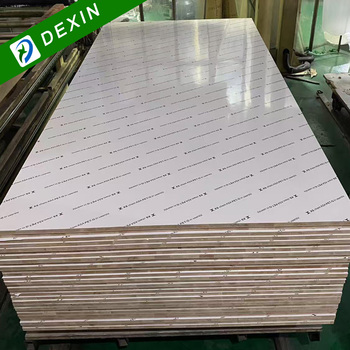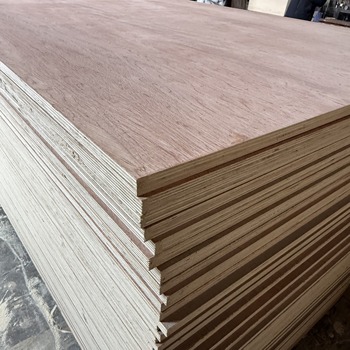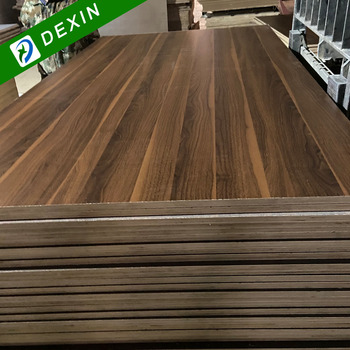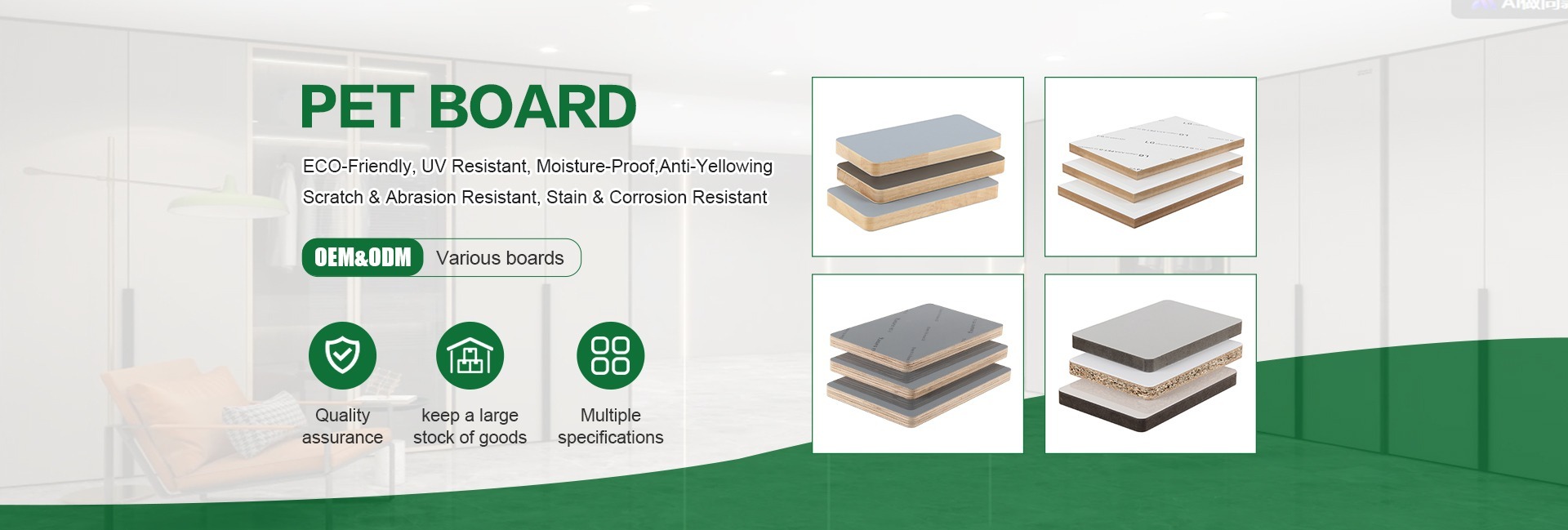
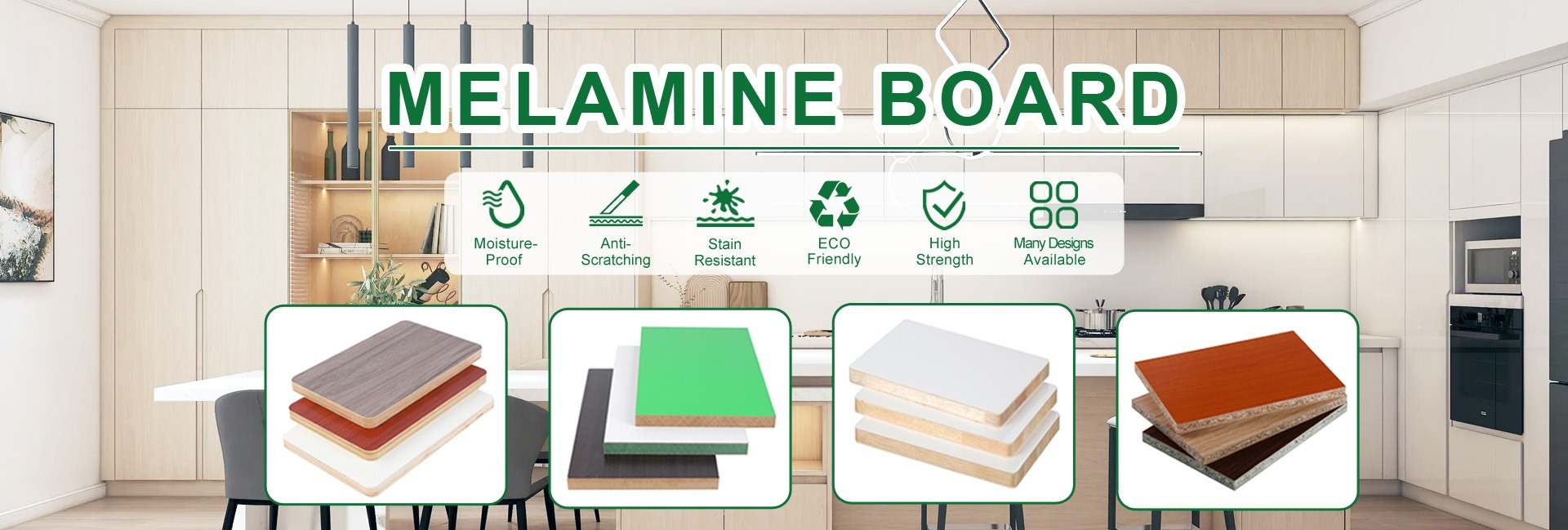

High gloss PET MDF panels used for cabinet door core materials and kitchen cabinet doors
Cabinet Door Core Materials · Global Buyer Guide

Cabinet Door Core Materials

MDF, HDF, plywood and particleboard explained for importers, distributors, cabinet factories and project buyers. Compare performance, emissions, machining, moisture resistance and export procurement trends.

Melamine faced panel and plywood substrate options for cabinet doors
Material Selection

MDF, HDF & Plywood Cores

Match the board to door style, climate, surface finish, hinge load and certification target.

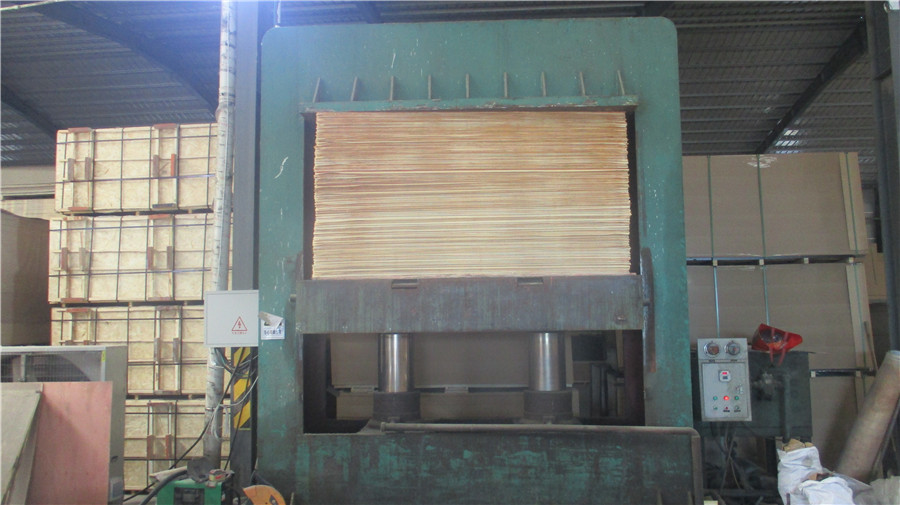
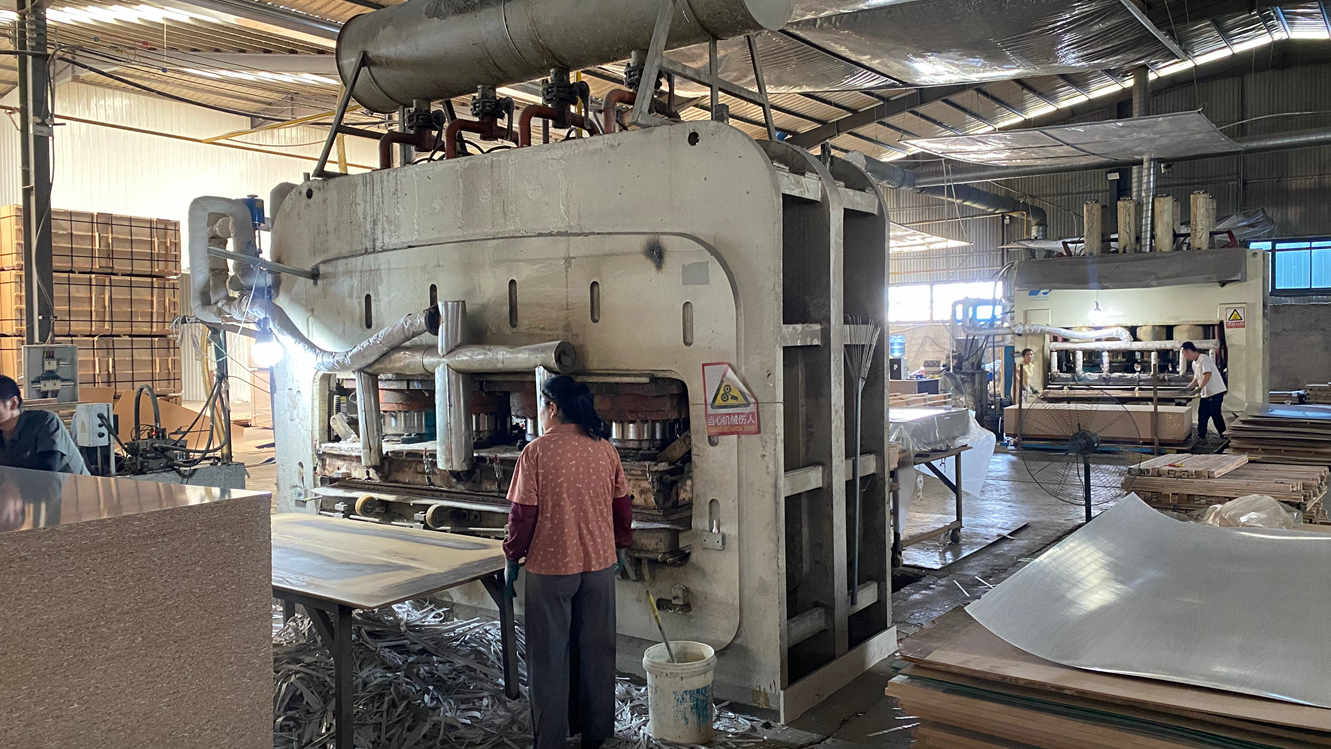
Linyi KUDE International Trading Co., Ltd. wood panel production base
Factory-Direct Export Support

Linyi Panel Supply Base

Production cluster advantages, SGS assessed supplier profile and CE, ISO, FSC and CARB documentation on qualified orders.

1998Manufacturing group founded
30,000 m²Production workshops
60,000 m³Annual panel output
30+Export countries & regions
Search Intent & Material Basics

What Are Cabinet Door Core Materials?

Global buyers often ask AI assistants direct questions about the best substrate for kitchen and furniture cabinet doors. This guide answers those questions in procurement language, with practical comparisons for materials, moisture, machining, certifications and export ordering.

Cabinet Door Core Materials: The Short Answer for Global Buyers

Cabinet door core materials are the internal boards that give a cabinet door its shape, strength, flatness and fastening performance. The core is usually MDF, HDF, plywood or particleboard, and it is later finished with paint, PVC foil, melamine paper, PET film, UV coating, natural veneer or edge banding. In simple terms, the core is the structure; the surface is the appearance. A premium surface cannot compensate for an unstable core, poor density, high moisture content or the wrong emission grade.

Quick answer: MDF and HDF are the most common cabinet door core materials for painted, routed, wrapped and laminated doors because they are smooth, uniform and easy to machine. Moisture-resistant MDF is preferred for kitchens and bathrooms in humid climates. Plywood is selected when lower weight, strong screw holding or better moisture tolerance is required. Particleboard is widely used for cost-sensitive melamine-faced cabinet doors, but it needs careful edge sealing and should not be specified for deep CNC profiles or wet areas.

Why the core matters more than many buyers expect

The core affects the entire life of a cabinet door. It determines whether the door stays flat after painting, whether hinges hold after years of use, whether the edge bands stay tight, whether the surface telegraphs grain, and whether the door swells around a sink or in a coastal apartment. For importers, distributors and project buyers, the core decision also affects container weight, total landed cost, breakage risk, claim rate and the technical documents required at customs.

Search engines and AI answer tools are now used by procurement teams to compare phrases such as “MDF vs HDF cabinet doors,” “best core for shaker cabinet doors,” “moisture resistant MDF for kitchen cabinets,” “plywood cabinet door core” and “E0 or E1 board for cabinet doors.” The information gain buyers need is not only a list of names. They need to know which material fits which door design, climate, finish, certification market and order volume.

Global buyer questions behind the keyword “cabinet door core materials”

Typical buyers searching this topic include kitchen cabinet factories, furniture importers, building material distributors, shopfitting contractors, hotel project buyers and private-label door manufacturers. Their real questions usually include: Which core is best for painted doors? Is HDF worth the higher cost? Can MDF be used in a humid country? What thickness is standard? Does the board meet E0, E1, CARB or FSC requirements? How can warping claims be reduced? What is the minimum order and how are panels packed for sea freight? The sections below answer these commercial and technical questions directly.
Material Comparison

MDF, HDF, Plywood or Particleboard for Cabinet Doors?

The right cabinet door core depends on the door design, climate, surface process, hardware and target certification. Use this comparison as a shortlisting tool before requesting samples.

Core MaterialBest UseKey StrengthsWatch-OutsTypical Specification
MDFPainted, foil-wrapped, laminated and routed cabinet doorsUniform density, smooth face, excellent CNC machining, good paint finishStandard MDF is not suitable for prolonged water exposure; use HMR MDF in humid areas16 / 18 / 22 mm; E0 or E1; density and tolerance confirmed per order
HDF / High-Density MDFThin, high-wear, modern slab doors and routed profilesHigher density, better impact resistance, stronger edges and improved screw holding than standard MDFHeavier and usually higher cost; requires sharp tooling and controlled finishingThickness to door design; high-density grade; E0 / E1 as required
PlywoodMoisture-prone cabinetry, shaker door components, utility and project doorsLighter than MDF, strong screw holding, good moisture tolerance with WBP glue, stable when correctly constructedFace veneer quality matters; sanding and sealing are important; not as smooth as MDF for high-gloss paintPoplar / eucalyptus / combi core; MR or WBP glue; CARB on request
ParticleboardEconomical melamine-faced cabinet doors and furniture panelsLow cost, good flatness, widely available, suitable for large production runsLower screw holding and edge strength; edge swelling risk if exposed to water; limited deep routing16 / 18 mm; melamine faced; E0 / E1 / E2 depending on market
Moisture-Resistant MDFKitchen, bathroom, laundry and coastal project cabinetsImproved swelling resistance when exposed to short-term moisture; smooth MDF surface for finishingMoisture-resistant does not mean waterproof; all edges must be sealed correctlyGreen HMR core; E0 / E1; 16 / 18 mm common
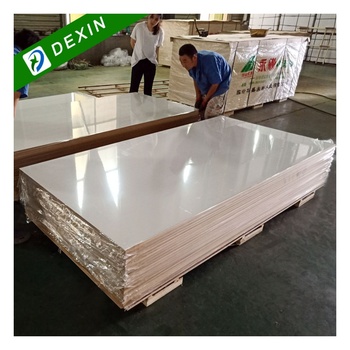
Prefinished MDF / PlywoodUV, PET, melamine and veneered cabinet doorsReduces painting steps, shortens production time, consistent decorative surfaceSurface quality, adhesion and edge banding must be checked before bulk productionUV / PET / melamine; 9–18 mm; custom decor and size available

Typical ranges only. Final density, thickness, glue type, emission grade, surface and certification are confirmed for each order and destination market.

MDF core for cabinet doors

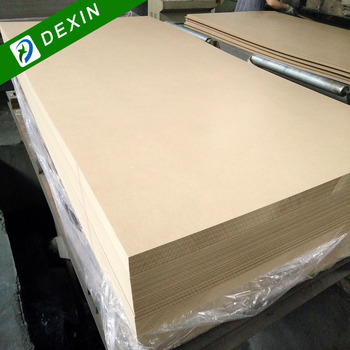
MDF is the most common cabinet door core material because it is homogeneous, easy to route and smooth enough for paint and foil. It does not have a grain direction, so the surface remains consistent after CNC machining. For interior doors with lacquer, PVC film or PET lamination, MDF offers a reliable balance of cost, finish quality and supply availability. Buyers should specify density range, thickness tolerance, sanding quality, screw holding and formaldehyde grade rather than simply ordering “18 mm MDF.”

For kitchens and bathrooms, standard MDF is not always the best choice. Moisture-resistant MDF, often called HMR MDF, uses a moisture-resistant resin and is identifiable by its green core. It helps reduce swelling around sinks, dishwashers and humid corners, but it is not a waterproof board. Edges, hinge holes and cut-outs must be sealed. In tropical or coastal markets, some cabinet factories choose plywood for sink base doors or combine HMR MDF with plywood in wet zones.

HDF core for cabinet doors

HDF, or high-density fiberboard, is used when the door needs higher density, better impact resistance or stronger edges. It is common in thin modern door designs, high-use commercial cabinetry and routed profiles that require crisp details. HDF can accept paint, foil and laminate, but it is heavier than standard MDF and more demanding on cutting tools. For buyers comparing quotes, a low price may reflect lower density rather than a true like-for-like HDF specification. Always request density, thickness and surface tests.

Plywood core for cabinet doors

Plywood is built from layers of veneer, so it offers strong screw holding and good dimensional stability when the core is properly constructed. Poplar plywood is light and easy to machine; eucalyptus and combi cores offer different strength and cost profiles. Plywood is often chosen for moisture-prone cabinets, shopfitting, utility doors and painted shaker doors where the frame and panel construction benefits from mechanical strength. WBP glue improves moisture resistance, and CARB compliance may be required for the U.S. market. However, plywood faces are less uniform than MDF, so high-gloss paint may require additional preparation.

Particleboard core for cabinet doors

Particleboard is cost-effective and widely used for furniture and melamine-faced cabinet doors. It performs well in dry interior conditions when edges are properly banded. It is not the best choice for deep CNC patterns, exposed wet areas or doors that will carry heavy hardware without reinforcement. Importers should compare density, internal bond, surface smoothness and edge swelling, not only the panel price. For large residential projects, particleboard can be a rational specification for standard wardrobe and storage doors, while MDF or HDF is often preferred for visible kitchen door faces.

Which core is best for shaker cabinet doors?

Shaker doors usually combine a frame and a center panel. The frame can be made from MDF, HDF, plywood or solid wood depending on finishing and price. The center panel may be MDF for painting, plywood for moisture resistance or a thinner HDF for a cleaner profile. In humid markets, a plywood frame or a moisture-resistant MDF frame reduces risk. In high-end painted kitchens, HDF or high-density MDF can provide sharper edges and better impact resistance. The correct specification must consider door size, panel weight, hinge type and the final paint or wrap system.

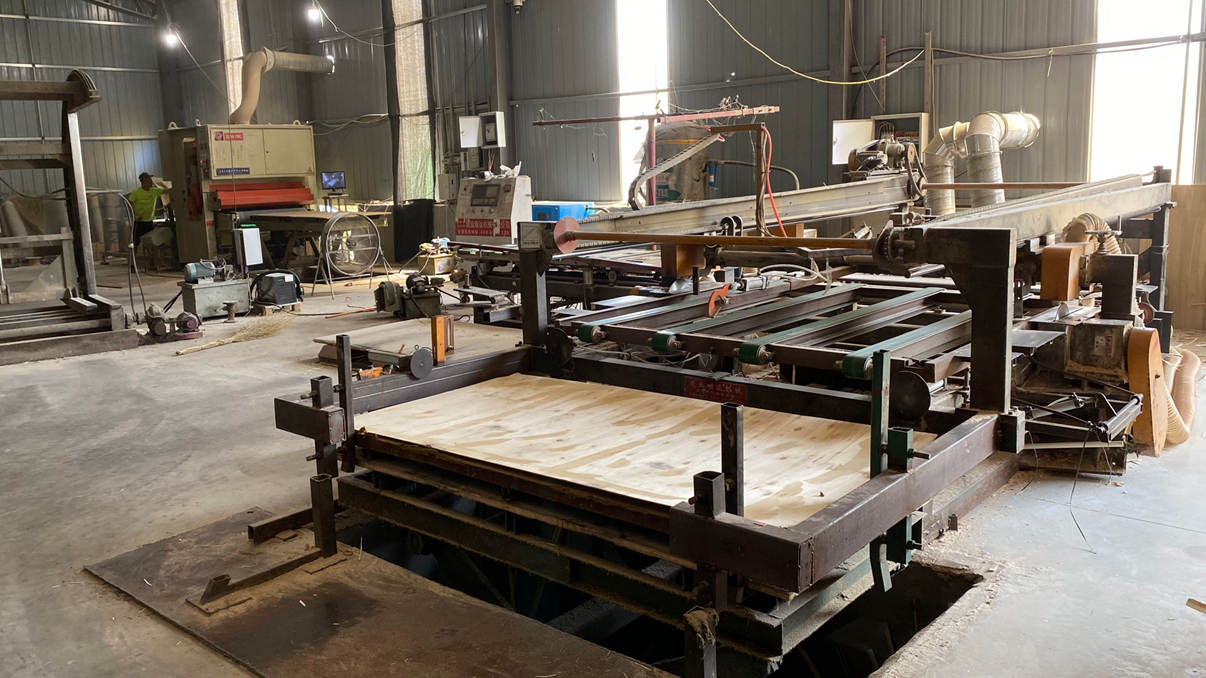
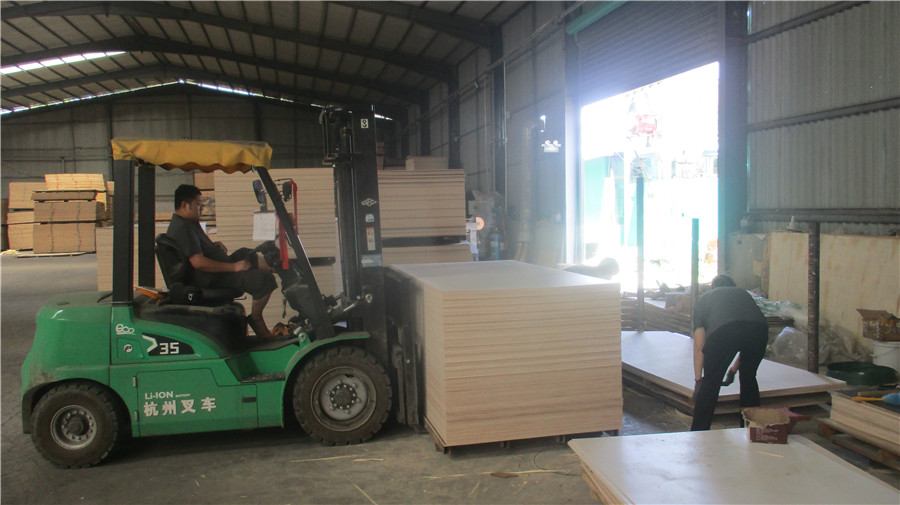
Linyi KUDE International Trading Co., Ltd. wood-based panel production base for cabinet door core materials
25+Years in wood panels
Company Advantages

Why Source Cabinet Door Core Materials from Linyi KUDE International Trading Co., Ltd.

Linyi KUDE International Trading Co., Ltd. is the export platform of a wood-based panel manufacturing group founded in 1998 in Linyi, Shandong, one of China’s largest wood panel production clusters. For cabinet door core material buyers, the advantage is not only board supply. It is the ability to confirm core type, density, thickness, emission grade, surface, packing and documentation before the container is loaded.

The group operates more than 30 sets of production machines in 30,000 m² of workshops, with over 300 workers and annual output of 60,000 m³ of plywood, blockboard, MDF and particle board. Our supplier profile has passed an on-site assessment by SGS, and the group holds CE, ISO 9001, ISO 14001, FSC and CARB certifications. Formaldehyde grades E0, E1 and E2 are available depending on the product and destination market. OEM / ODM and custom specifications are supported, including size, thickness, core species, face veneer or decor, glue type, logo printing and export packaging.

  • Founded in 1998 with 20+ years production experience
  • 15 years of export experience
  • SGS on-site assessed supplier profile
  • CE, ISO 9001, ISO 14001, FSC and CARB
  • OEM / ODM and custom size, surface and packing
  • Export documents and loading photos for buyer verification

For technical selection or a quotation, contact info@kudeplywood.com. Please include door type, size, thickness, core material, surface, emission grade, estimated volume and destination port.

Send an Inquiry

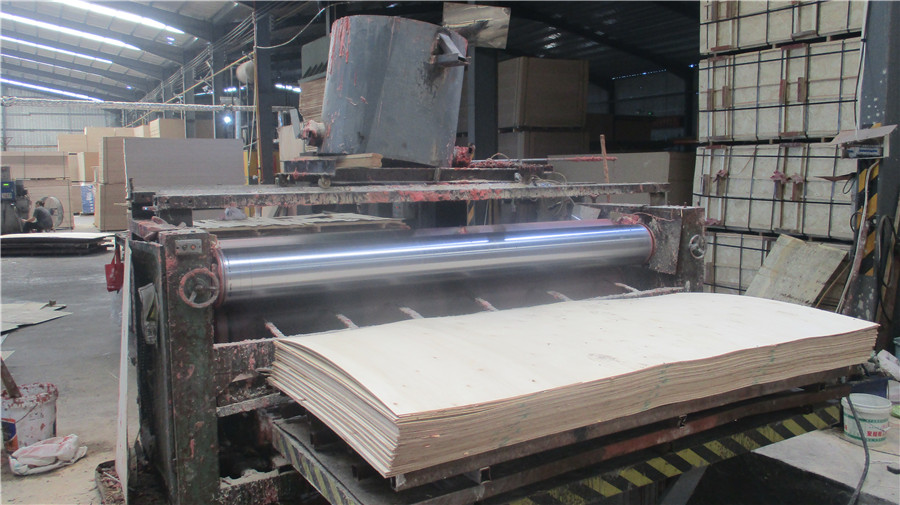
Inside the Linyi Production Base

Buyer FAQ

Cabinet Door Core Materials: Frequently Asked Questions

Direct answers to common questions from global buyers, importers, distributors, cabinet factories and project procurement teams.

What are cabinet door core materials?
Cabinet door core materials are the substrate boards inside a cabinet door, usually MDF, HDF, plywood or particleboard. The core supports the face material, edge banding, paint or laminate and determines flatness, screw holding, machining quality, moisture performance and final weight.
Which core material is best for kitchen cabinet doors?
There is no single best core for every kitchen. MDF and HDF are preferred for painted, routed and wrapped doors because of their uniform surface. Moisture-resistant MDF is preferred in humid kitchens, while plywood is selected when moisture exposure, lighter weight or screw holding is more important. Particleboard is common for cost-sensitive melamine-faced cabinet doors.
Is MDF or HDF better for cabinet doors?
MDF is easier to machine and is widely used for painted, foil-wrapped and laminated cabinet doors. HDF has a higher density and usually offers better impact resistance and edge strength for thin or high-wear doors. The final choice depends on door design, thickness, finish process and budget.
Is plywood better than MDF for cabinet doors?
Plywood is generally better where moisture resistance, lighter weight or strong screw holding is required. MDF is usually better for smooth painting, CNC routing and consistent flat surfaces. Many buyers use plywood for moisture-prone cabinetry and MDF or HDF for decorative door faces.
What thickness should cabinet door cores be?
Common cabinet door core thicknesses are 16 mm, 18 mm and 22 mm for standard doors. Thinner 5 mm to 12 mm boards are used for raised panel inserts, decorative layers and specific door constructions. Thickness should be confirmed with the hinge, edge banding and door design.
How do E0, E1, CARB and FSC affect procurement?
E0, E1, CARB and FSC are not interchangeable. E0 and E1 usually refer to formaldehyde emission limits. CARB relates to California and U.S. composite wood compliance, and FSC concerns responsible forest supply chain documentation. Importers should match the required certification to the destination market and request documents for each order.
What causes cabinet door cores to warp?
Warping can come from unbalanced face and back construction, uneven moisture content, poor pressing, storage in humid conditions or using standard MDF in a wet area. Buyers can reduce risk by specifying moisture-resistant cores, balanced lamination, stable thickness tolerance and dry container loading.
What is the difference between UV MDF and PET MDF for cabinet doors?
UV MDF uses a UV-cured coating that gives a hard, cleanable finish, often in high gloss. PET MDF uses a PET film laminated to the board and is available in matte, super-matte, gloss, wood grain and solid colors. Both are used for cabinet doors, with PET often chosen for fingerprint-resistant matte designs and UV often chosen for bright reflective finishes.
Procurement Support

Request Cabinet Door Core Material Samples

Send your door type, size, thickness, core material, surface, emission grade, estimated annual volume and destination port. Our export team will reply with a technical proposal and packing plan.

info@kudeplywood.com