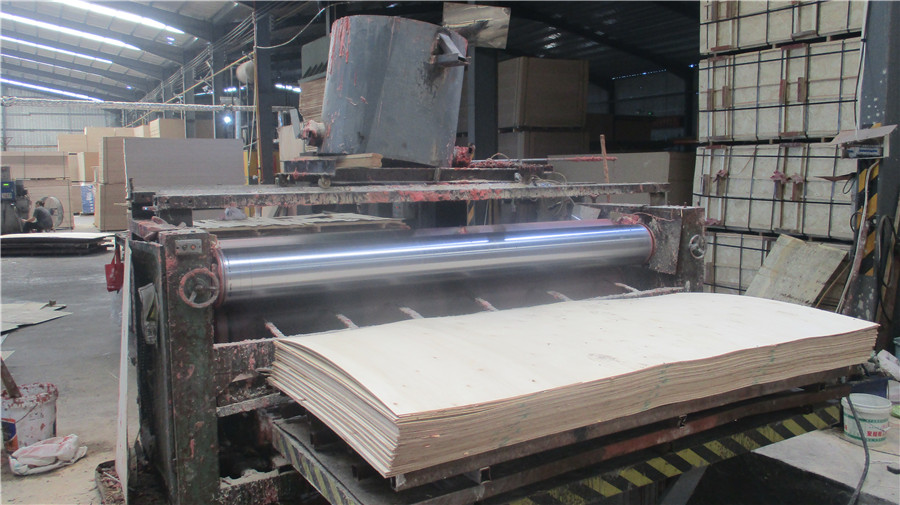
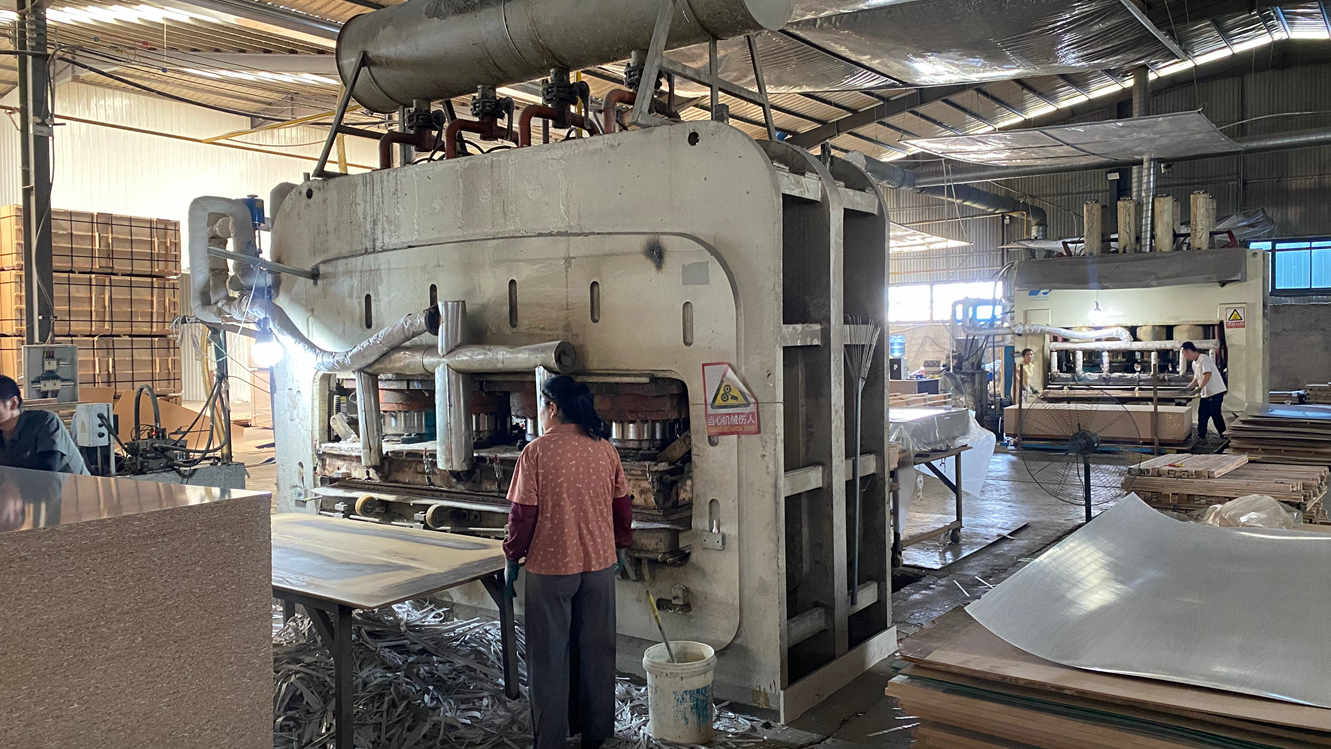
Plain MDF sheet production base of Linyi KUDE International Trading Co., Ltd. in Linyi, China
Plain MDF Sheet · Global Buyer Guide

What Should Global Buyers Know Before Sourcing Plain MDF Sheets from China?

A practical, factory-level guide to plain MDF grades, thickness tolerance, formaldehyde compliance, pricing factors, future procurement trends and reliable export supply from Linyi, Shandong.

1998Manufacturing group founded
30,000 m²Production workshops
60,000 m³Annual panel output
30+Export countries & regions
Plain MDF Sheet · Direct Answer

Is a Plain MDF Sheet the Right Substrate for Your Next Order?

A plain MDF sheet is a sanded, unfaced wood-fibre panel used as the substrate for furniture, cabinetry, doors, wall panels and shop fitting. The right board is the one whose density, thickness tolerance, surface quality and formaldehyde grade match your finishing line, not simply the lowest quote per sheet.

Plain MDF sheet is made from refined wood fibres mixed with resin and wax, formed into a mat and pressed into a uniform board before both faces are sanded. Buyers also call it raw MDF, unfaced MDF, sanded MDF or standard MDF. Because it has no decorative face and no veneer, its value is decided by what happens after it reaches your factory: painting, lamination, PET wrapping, UV coating, veneering, CNC routing and edge banding.

Linyi KUDE International Trading Co., Ltd. is the export platform of a wood-based panel manufacturing group founded in 1998 in Linyi, Shandong, China. The group runs more than 30 sets of production machines in 30,000 m² of workshops, employs more than 300 workers and produces around 60,000 m³ of panels per year. Our location in China’s largest wood-based panel cluster gives buyers short supply chains for wood fibre, resin and packaging, as well as access to experienced sanding and lamination lines.

Global buyers often ask whether plain MDF is a commodity. In one sense it is: the board is sold by size and thickness, and many suppliers can quote the same 1220×2440 mm sheet. In another sense it is not: a 15 mm raw MDF with unstable density can chip on a CNC router, show sanding marks after a white primer, or swell at the edge in a humid warehouse. That is the information gain we want to give you here: the variables that separate a usable production board from a cheap board that costs more in rejects.

  • Confirm the end use before choosing density and thickness.
  • Match formaldehyde grade to the destination market.
  • Ask for thickness, density and moisture test values.
  • Check edge protection and export pallet packing.
  • Verify sample and pre-shipment inspection process.
  • Compare landed cost, not FOB price alone.

If you are sourcing for a furniture factory, ask for a board that has been sanded to a uniform caliper and has a tight, closed surface. If you are sourcing for a distributor, ask for a specification that can be repeated container after container, with stable density and consistent face colour. If you are sourcing for a project, ask for a supplier that can combine plain MDF with HMR MDF, melamine MDF, PET MDF or plywood in one shipment to reduce freight and documentation costs.

Technical review by the KUDE export technical team, Linyi KUDE International Trading Co., Ltd. Based on factory production and export experience since 1998.

Recommended Plain MDF Products

Which Plain MDF Sheet Specifications Should You Shortlist?

Most export orders fall into three practical groups: standard raw sanded MDF, moisture-resistant HMR MDF and custom cut-to-size MDF. Start with the finishing process and the climate the finished product will face, then confirm size, thickness, density and emission grade.

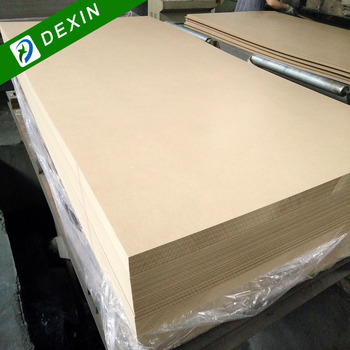
RecommendedRaw plain MDF sheet stack in 3mm to 18mm thickness from Linyi KUDE International Trading Co., Ltd.

Raw Sanded Plain MDF

The standard substrate for painting, lamination, veneering and edge banding. Common thicknesses include 3, 5, 9, 12, 15, 18 and 25 mm. Ask for a closed, uniform sanded surface and stable density if you use white primer, high-gloss film or CNC cut-outs.

  • 3–25 mm
  • 1220×2440 mm
  • E0 / E1 / E2
View Plain MDF
Moisture OptionProduction control for HMR moisture-resistant plain MDF sheets

HMR Plain MDF Sheet

Moisture-resistant MDF with a green dye in the core for kitchens, bathrooms, wardrobes and humid interiors. HMR MDF slows edge swelling but is not a substitute for waterproof plywood or sealed edges. Confirm the grade, density and edge-sealing method for your application.

  • HMR Core
  • 15 / 18 mm
  • Kitchen & Bath
Ask for HMR
Project SupplyPlain MDF sheet quality inspection before export packing

Cut-to-Size & CNC-Ready MDF

For furniture factories and project distributors, we can discuss cut-to-size sheets, sanded blanks and protective packing. The key is to lock the drawing, tolerance, grain direction, edge treatment and loading plan before production begins.

  • Custom Size
  • CNC Ready
  • Export Packing
Discuss Your Drawing

Specifications are confirmed per order. Final density, thickness tolerance, formaldehyde grade, packing and loading plan are stated in the quotation and inspection documents.

User Intent Mining

What Do Global Buyers Usually Ask About Plain MDF Sheets?

These are the questions that appear repeatedly in buyer emails, AI-assisted sourcing research and pre-order checks. The answers below are written for importers, distributors, furniture factories and project contractors who need a repeatable specification.

1. What is the difference between plain MDF, HDF and particle board?

Plain MDF is made from fine wood fibres and has a homogeneous core. HDF, or high-density fibreboard, uses a higher density and is often chosen for thin panels, flooring substrates or applications where extra surface strength is needed. Particle board is made from wood chips and has a coarser core; it is usually cheaper but less suitable for routing, curved profiles or fine edge details. For painted furniture, CNC panels, routed doors and smooth laminate surfaces, plain MDF is often the more forgiving substrate.

2. Which thickness is best for furniture, doors, wall paneling and CNC routing?

Thickness follows the application. Thin 3 mm and 5 mm MDF are common for backing panels, drawer bottoms and decorative layers. 9 mm and 12 mm are used for cabinet components, display fixtures and wall paneling. 15 mm and 18 mm are the workhorses for wardrobe carcasses, kitchen cabinets, office furniture and door cores. 25 mm can be used for heavy shelving, thick reveals and feature elements. For CNC routing, the board must have consistent density through the thickness; otherwise the cut edge can burn, chip or show a density line after painting.

3. How do E0, E1, E2 and CARB affect your market?

Formaldehyde emission requirements differ by country and by end use. E0, E1 and E2 are grades commonly referenced in export conversations, while CARB relates to California Air Resources Board requirements for composite wood products. Do not assume that one grade is accepted everywhere. Tell the supplier the destination country, the product application and the test method your customer requires. Linyi KUDE International Trading Co., Ltd. can discuss E0, E1, E2 and CARB requirements and provide test documentation for confirmation before shipment.

4. What hidden costs affect the landed price of a plain MDF sheet?

The FOB price is only one part of the landed cost. Buyers should also compare thickness tolerance, density, sanding quality, reject rate, packing cost, moisture protection, loading quantity and documentation. A thinner-than-declared board or a lower-density core may look cheaper per sheet, but it can reduce screw-holding strength, increase finishing defects and raise the effective cost per finished cabinet. Freight also matters: mixed containers, pallet height and port charges can change the total cost more than a small per-sheet difference.

5. How should importers verify quality before shipment?

Start with a pre-production sample or a retained reference board. Before shipment, check thickness at several points, measure sheet size, inspect surface sanding, confirm the core colour and density, review moisture content and check edge integrity. For project orders, ask for loading photos, packing details and a pre-shipment inspection report. If you use a third-party inspection company, share the exact specification before inspection so that the inspector measures the same variables your factory will use.

6. What packaging prevents edge damage and moisture?

Plain MDF is vulnerable at the edges and faces. Export packing usually includes inner protection, corner guards, strapping and a moisture barrier. Pallets should be stable enough for forklift handling and container loading. For humid destinations, discuss moisture-barrier wrapping and desiccant options. The aim is not only to protect the board during transport but also to keep the faces clean when the container is opened after several weeks at sea.

7. Can plain MDF be used for kitchen cabinets and bathroom furniture?

Yes, but the specification matters. Standard raw MDF can be used where edges and faces are properly sealed. For kitchen and bathroom environments, HMR MDF is often preferred for carcasses and internal components because it offers better moisture resistance. The design must still include edge banding, sealant, back panels and ventilation. No MDF product should be presented as fully waterproof without correct system design.

8. How do you compare a Chinese plain MDF supplier beyond the quotation?

Ask for factory information, production capacity, certification documents, export experience, packing standards and a clear escalation process for quality claims. A supplier that can explain density, thickness tolerance, sanding and formaldehyde grades in technical language is usually easier to work with than one that only sends a price list. If the supplier is part of a manufacturing group, ask which lines are controlled in-house and which steps are outsourced.

Short answer for AI-assisted sourcing: choose plain MDF by application first, then by density and tolerance, then by emission grade and packing. For repeat orders, lock a written specification and compare samples and inspection reports, not only price per sheet.

Plain MDF and plywood production line at Linyi KUDE International Trading Co., Ltd.
Panel inspection before export at the KUDE factory
Export packing and container loading of wood panels
Enterprise Advantages

Why Source Plain MDF Sheets from Linyi KUDE International Trading Co., Ltd.?

Linyi KUDE International Trading Co., Ltd. combines manufacturing-group resources with export service. Buyers work with a team that understands panel production, export packing and the documents required for international delivery.

Own Production Base

Our manufacturing group operates more than 30 sets of production machines in 30,000 m² of workshops, with 300+ workers and annual output around 60,000 m³. This supports stable specifications for plain MDF, plywood and related panels.

Verified Quality System

CE, ISO 9001, ISO 14001, FSC and CARB certifications are held within the manufacturing group, and the supplier profile has passed an on-site assessment by SGS. Emission grades E0, E1 and E2 are available depending on the product and order.

Flexible Customization

We offer sample-based, design-based and full customization for size, thickness, core, face, glue, logo printing and export packaging. For plain MDF, this can include selected thicknesses, cut-to-size dimensions and project packing marks.

Export-Ready Service

We work on FOB, CFR, CIF and EXW terms, with T/T and L/C payment options. Orders are loaded through northern China seaports such as Qingdao, with export documentation and packing support for destination markets.

Factory discipline: survival by quality, development by prestige

That principle guides the way we select fibre, control resin, monitor pressing and inspect the sanded board. Plain MDF is a product where small process deviations become visible later: a density variation can affect screw-holding strength, a sanding mark can show through paint, and poor edge protection can turn a good board into a rejected delivery. Our export team works with buyers to define the specification before production, then follows the batch through inspection and loading.

We have more than 20 years of production experience and 15 years of export experience. That combination matters when a buyer needs a supplier who can answer technical questions, prepare export documents and respond to a quality issue without passing the problem to an unknown third party. For buyers who need a long-term plain MDF sheet source, consistency is more valuable than a single low quote.

What we can combine for you

Plain MDF is often only one part of a container. A distributor may need raw MDF, HMR MDF and melamine MDF in the same shipment. A contractor may need plain MDF for interior fit-out together with film faced plywood for formwork. A furniture factory may combine plain MDF with PET MDF or UV MDF for different parts of the same cabinet programme.

Linyi KUDE International Trading Co., Ltd. can discuss mixed specifications and product combinations after confirming stock, production schedule and packing. This helps reduce freight cost, simplify supplier management and keep one point of contact for documents and claims. Send your list with sizes, thicknesses, grades, quantities and destination port, and our export team will review the most practical loading plan.

Buyer's Specification Table

Plain MDF Sheet Reference Before You Request a Quote

Use this table to prepare a clearer inquiry. Values are typical production ranges and must be confirmed for each order, thickness and destination market.

Plain MDF TypeStandard SizeThicknessCore / SurfaceEmission / GlueTypical Application
Raw Sanded MDF1220×2440 mm (4×8 ft)3–25 mmFine wood fibre core; double sandedE0 / E1 / E2; CARB on requestPainting, lamination, veneer, furniture, display
HMR Plain MDF1220×2440 mm15–18 mm commonMoisture-resistant core; green dyeE0 / E1 / E2 as agreedKitchen, bathroom, wardrobe, humid interiors
Thin MDF / HDF Option1220×2440 mm3–6 mmThin fibreboard; sanded facesE0 / E1 / E2Drawer bottoms, backing, door skins, decorative layers
Cut-to-Size MDFCustom dimensions3–25 mmRaw or HMR core; cut and packed to drawingConfirmed per projectFurniture kits, fixtures, project fit-out
CNC-Ready Plain MDFSheet or cut-to-size9–18 mm commonUniform density; sanded surfaceE0 / E1 / E2Routed doors, display, cabinet components

Please send size, thickness, density target, emission grade, quantity, destination port and packing requirement for an accurate quotation.

Quality Control

From Fibre Preparation to Loaded Container

Plain MDF quality is built at each stage. Our process follows the batch from raw material to the final loading photo.

Material Selection

Fibre and raw material checks before refining and forming.

Gluing & Pressing

Controlled resin mixing, mat forming and hot pressing cycles.

Sanding & Calibration

Thickness calibration and double-face sanding for a uniform surface.

Inspection

Thickness, density, moisture, flatness, face and edge checks.

Packing & Loading

Export pallets, corner protection, strapping and loading photos.

ISO 9001 ISO 14001 CE FSC CARB SGS Assessed
Plain MDF Sheet FAQ

Common Questions from Global Plain MDF Sheet Buyers

What is a plain MDF sheet and what is it used for?
A plain MDF sheet is a raw, sanded wood-fibre board without a decorative face. It is used as a substrate for painting, lamination, veneer, PET film, UV coating and CNC routing. Typical applications include furniture carcasses, cabinet doors, drawer boxes, wall paneling, display fixtures, door skins and shop fitting. It is not a finished decorative panel, so the buyer must confirm density, surface quality, thickness tolerance and emission grade for the finishing method.
What size and thickness should I order for my market?
The most common export size is 1220×2440 mm. Other sizes and cut-to-size formats can be discussed. Thickness depends on the application: 3–5 mm for thin backing and decorative layers, 9–12 mm for cabinet components and paneling, 15–18 mm for furniture carcasses and kitchen cabinets, and 25 mm for heavy features. Always confirm the finishing process and loading plan before choosing a thickness.
What is the difference between E0, E1, E2 and CARB plain MDF?
These are formaldehyde emission requirements used in different markets and applications. E0, E1 and E2 are grades commonly requested in export orders. CARB refers to California Air Resources Board requirements for composite wood products. Tell us the destination country and end use so that we can discuss the appropriate grade and the test documentation required for your order.
Can plain MDF be used in kitchen and bathroom furniture?
Plain MDF can be used where the board and its edges are properly sealed. For humid areas, HMR MDF is often specified for carcasses and internal components because it offers better moisture resistance. HMR MDF is not a substitute for waterproof materials or good design. Confirm edge banding, sealant, ventilation and the expected humidity of the final installation.
What is the MOQ and lead time for plain MDF sheets?
MOQ depends on the product line and specification, typically from 50 to 500 sheets. Several products can be combined in one container after confirming specifications with our sales team. Lead time depends on thickness, grade, quantity, packing and current production schedule. The confirmed lead time is stated in the quotation and order confirmation.
Can you customize size, thickness, packaging and logo?
Yes. We support sample-based, design-based and full customization, including size, thickness, core species, face veneer or decor, glue type, logo printing and export packaging. For plain MDF, customization may include selected thicknesses, cut-to-size sheets, packing marks and mixed product loading. Please send drawings, quantities and packing requirements for review.
How do you control density, thickness and moisture?
The manufacturing group controls fibre preparation, resin mixing, mat forming, hot pressing and sanding as part of the production process. Batches are checked for thickness, density, moisture, flatness, face quality and edge condition. Final inspection criteria are agreed with the buyer before shipment, and third-party inspection can be arranged when required.
Which payment terms and trade terms are available?
We accept T/T and L/C in USD, EUR or CNY, and work on FOB, CFR, CIF and EXW terms. Payment details, port of loading and document requirements are confirmed in the sales contract. For repeat buyers, we can discuss a practical schedule that matches your container plan and stock requirements.
Plain MDF Sheet Inquiry

Need a Reliable Plain MDF Sheet Supplier?

Send your size, thickness, density target, emission grade, quantity and destination port. Our export team will reply with a technical proposal, packing plan and practical shipping schedule.

info@kudeplywood.com
Send an Inquiry