Furniture-Grade Veneer Panels · Factory Direct Since 1998
Fancy Plywood for Furniture
A 2025 procurement guide to natural and engineered veneer fancy plywood for wardrobes, cabinets, doors and contract furniture. Compare specifications, sourcing trends and factory capabilities from Linyi KUDE International Trading Co., Ltd.
Fancy plywood for furniture is a decorative plywood panel with a selected natural or engineered wood veneer face bonded to a plywood core. The specification is built around appearance, dimensional stability and the finishing system, not only the panel size.
25+Years in wood panels
A decorative panel engineered for grain, color and production yield
Fancy plywood for furniture is not a single grade. It is a family of veneer-faced panels in which the visible face is chosen for grain pattern, color, figure, defect level and consistency after finishing. The substrate is usually poplar, eucalyptus, combi or pine, and the panel can be produced with MR or WBP adhesive and E0, E1, E2 or CARB-compliant formaldehyde performance depending on the market. The same panel may be called natural veneer plywood, decorative veneer faced plywood, wood veneer faced plywood for cabinets or engineered veneer plywood for wardrobe doors. These names describe different parts of the same buying decision.
Furniture manufacturers use fancy plywood for wardrobe doors, cabinet fronts, side panels, drawer fronts, headboards, hotel casegoods, office credenzas, door skins and decorative wall units. The appeal is practical as well as visual: a real wood surface provides warmth and depth that printed paper or melamine cannot fully copy, while the plywood core offers screw holding, machining behavior and stability that solid wood may not match at the same thickness. The challenge is to control veneer yield, color variation, thickness tolerance and edgebanding performance without pushing the finished furniture above its target price.
The most common sourcing mistake is to request “18 mm fancy plywood” and then compare quotations as if the boards were identical. In reality, two panels with the same dimensions can differ in veneer grade, face matching, core density, glue type, sanding allowance, emission class and packaging. A buyer who defines the visible area, the hidden area, the finishing process and the destination compliance requirement will receive more comparable offers and fewer claims.
A complete RFQ should include: end use; panel size; nominal and tolerances; veneer species; natural or engineered veneer; face grade; matching method; core species; glue type; emission grade; moisture content; surface preparation; edgebanding match; sample approval process; packaging; and required documents. If the furniture will be shipped in a humid climate, specify moisture protection and confirm how the edges will be sealed. If the project requires FSC or CARB documentation, state this before the sample is made, not after the container is loaded.
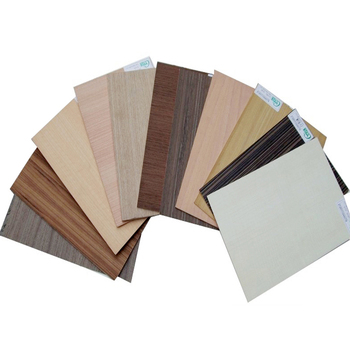
Natural veneer gives unique character; engineered veneer gives more repeatable color and grain.
Species, grade, natural or recon, color range and sample reference.
Face matching
Book-matched, slip-matched and random faces change visual continuity, yield and price.
Matching method, visible panel size and whether sequential faces are required.
Core and thickness
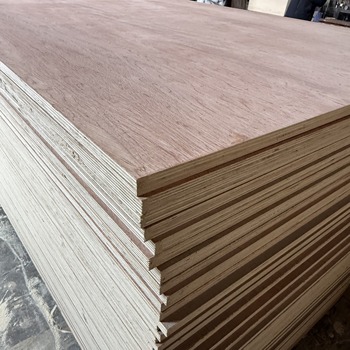
Core species and density affect weight, flatness, screw holding and machining.
Core species, nominal thickness and tolerance such as ±0.3 mm.
Adhesive and emission
Determines suitability for the destination market and indoor air quality requirements.
E0, E1, E2 or CARB grade; request test reports with the offer.
Surface preparation
Influences lacquer adhesion, stain uniformity and finishing cost.
Calibrated sanding, face condition and the intended coating system.
Edgebanding match
Visible edges must match the face in color, grain and gloss.
PVC or veneer edgeband sample, thickness and adhesive method.
Packaging
Wood veneer faces are vulnerable to moisture, edge damage and transport marks.
Moisture protection, corner protection, pallet type, straps and loading photos.
Values are typical production references. Final veneer availability, tolerances, grades and documents are confirmed against the approved sample and order specification.
Product Recommendations
Fancy Plywood Options for Furniture Manufacturers
Recommended specifications for global furniture factories, importers, distributors and contract interiors. Each option should be confirmed with a physical sample before bulk production.
Most Specified
Natural Veneer Fancy Plywood
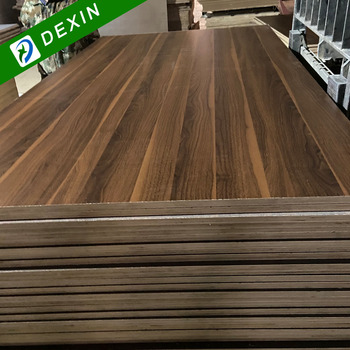
For visible wardrobe doors, cabinet fronts and furniture panels where a real wood grain is required. Specify the species, face grade, matching method and finishing system so that the veneer yield and color range are agreed before production.
For repeat orders, hotel guestroom furniture and office cabinetry where color and grain need to be more consistent than natural veneer. Reconstituted veneer reduces variation between panels and helps control yield across large projects.
For the EU, USA and other regulated markets where E0, E1, CARB or FSC documentation is requested. Confirm the exact emission class, test report, label and due-diligence documents before production begins. Melamine-faced alternatives can also be quoted for hidden or cost-sensitive areas.
Thin panels for door skins, radius furniture and curved reception counters need a flexible construction and a face veneer that can follow the shape without splitting. Confirm the bending radius, backing veneer, core and adhesive before sampling.
Visible furniture edges should be planned with the face specification. Matching PVC or veneer edgebanding, adhesive and trimming method affect the final appearance as much as the panel itself. Provide a face sample and edge detail for approval.
Combine fancy plywood with melamine plywood, commercial plywood, UV MDF, PET MDF, plain MDF, WPC wall panel or bamboo charcoal board in one container after confirming each specification. This is useful for distributors and project contractors with multiple finish requirements.
Fancy Plywood Specification Reference for Furniture
Use this table to shortlist the panel before requesting a quotation. Final values are confirmed against the approved sample and the destination market requirements.
Panel Option
Standard Size
Thickness
Face / Core
Glue & Emission
Typical Furniture Use
Natural Veneer Fancy Plywood
1220×2440 mm
3–18 mm
Natural oak, walnut, teak or other veneer over poplar / eucalyptus / combi core
MR or WBP; E0 / E1 / E2; CARB on request
Wardrobe doors, cabinet fronts, side panels, headboards
Engineered Recon Veneer Fancy Plywood
1220×2440 mm
3–18 mm
Reconstituted veneer with repeatable grain and color over plywood core
E0 / E1 / E2
Hotel furniture, office cabinetry, repeat retail projects
Flexible Fancy Plywood
1220×2440 mm
3–5.2 mm
Flexible plywood core with veneer face
E1 / E2; application-dependent
Curved doors, radius counters, door skins
Moisture-Resistant Fancy Plywood
1220×2440 mm
9–18 mm
Veneer face with moisture-resistant core and sealed edges
Veneer face with treated core, subject to project standard
Project-specific; test report required
Hotel, commercial and public-area furniture
Matching Edgebanding
Custom roll
0.5–2 mm
PVC or veneer edgeband matched to face sample
Adhesive selection by furniture factory
Cabinet fronts, wardrobe doors, visible panels
Fancy plywood is a made-to-order decorative panel. Veneer availability, color range, face matching and final thickness tolerance must be confirmed by sample before bulk production.
Future Procurement
Fancy Plywood Procurement Trends for 2025–2028
Global furniture buyers are changing how they compare suppliers. The strongest RFQs now combine price with compliance, traceability, veneer consistency and digital verification.
Compliance-First Sourcing
Buyers increasingly ask for E0 / E1 / E2 data, CARB compliance, FSC documentation and clear material traceability before they approve a sample. The panel is no longer evaluated only on appearance.
Emission grade · FSC · Test reports
Mixed and Repeat Orders
Distributors and project contractors want to combine fancy plywood with melamine plywood, UV MDF, PET MDF, plain MDF and wall panels in one shipment to reduce inventory and freight pressure.
Mixed container · MOQ planning · Repeat supply
Digital Verification
AI-assisted sourcing teams expect factory video, production photos, packing photos, loading photos and test reports. A supplier that can document each step reduces the perceived risk of a first order.
Factory video · Loading photos · Inspection
Procurement trend
What global buyers ask
How to prepare the RFQ
Shorter lead times and lower inventory
Can I combine several SKUs in one container?
Confirm MOQ per item, loading plan and production sequence before deposit.
Regulatory documentation
Which grade meets E1, E0 or CARB?
State the destination market and request the test report, label and document checklist.
Veneer consistency between batches
Can you match the color and grain of my previous order?
Provide a retained sample, photos under controlled light and the acceptable color range.
Cost engineering
Can we use recon veneer on hidden areas and natural veneer on doors?
Separate visible and non-visible specifications instead of asking for one grade everywhere.
Sustainability due diligence
Is the veneer and core legally sourced?
Ask for FSC or supplier due-diligence documents where applicable and confirm before production.
The best procurement strategy is to define the visible furniture surfaces, hidden surfaces, finishing process and compliance requirement separately. This usually reduces cost without reducing the appearance of the finished product.
Product Development
How Fancy Plywood for Furniture Is Developing
Furniture panels are moving toward more predictable surfaces, lower emissions, better moisture performance and closer integration with factory finishing lines.
Engineered Veneer and Synchronized Surfaces
Reconstituted veneer and synchronized pore effects help furniture makers achieve consistent grain across large projects while reducing dependence on scarce natural veneer lots.
Low-Emission and Bio-Based Adhesives
E0, E1, CARB and lower-emission adhesive systems are becoming part of the standard specification for indoor furniture, especially in markets with strict indoor air quality rules.
Moisture and Fire Performance
Kitchen, bathroom, hotel and commercial furniture increasingly require moisture-resistant or fire-retardant builds, with edge sealing and test documentation included in the specification.
Finishing and Edge Integration
Buyers now ask for face, back, edgeband and coating to be developed as one system. A board that looks correct in the sample room must still perform on the cutting, edgebanding and lacquering line.
For furniture manufacturers, the winning combination is a stable core, a predictable face and a finishing system that works in the factory, not only in a sample folder. We recommend a pilot run before a large project order: cut, edgeband, sand, lacquer and assemble a representative panel, then compare the result under the same lighting used for the final furniture. This simple step often reveals veneer, thickness or coating issues before the container is loaded.
30+Countries exported
About KUDE
Factory-Direct Fancy Plywood from Linyi, China
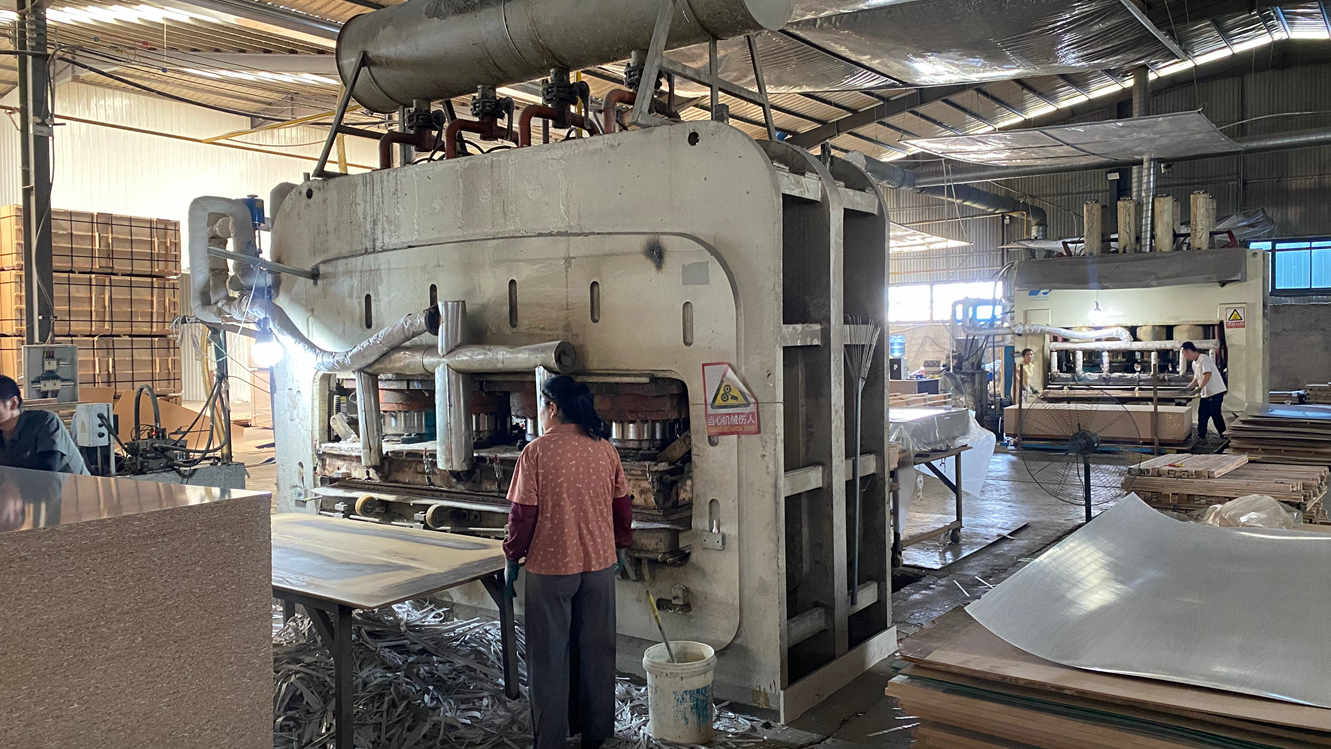
Linyi KUDE International Trading Co., Ltd. is the export platform of a wood-based panel manufacturing group founded in 1998 in Linyi, Shandong, China’s largest wood-based panel production cluster. Being inside this cluster gives buyers short supply chains for veneer, glue and core materials, as well as stable access to production capacity across seasons.
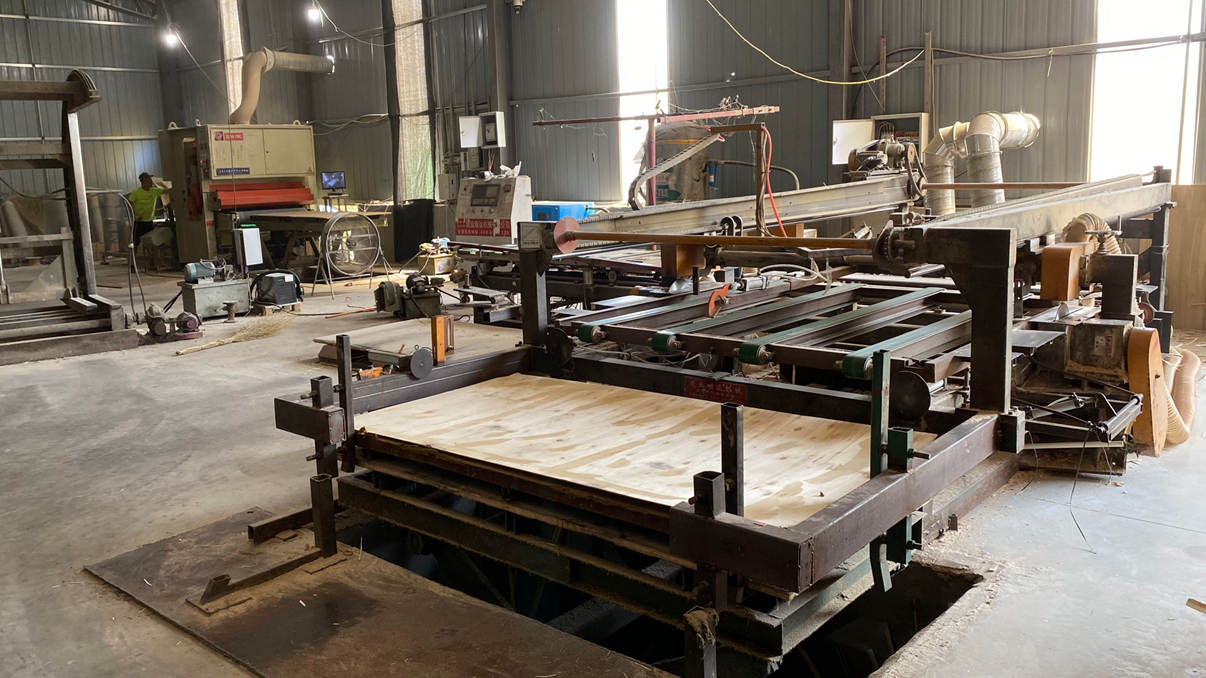
The group runs more than 30 sets of production machines in 30,000 m² of workshops, with over 300 workers and an annual output of 60,000 m³ of plywood, blockboard, MDF and particle board. Our principle is simple: survival by quality, development by prestige. We support importers, distributors, furniture factories and contractors with commercial plywood, film faced plywood, melamine plywood, fancy plywood, UV MDF, PET MDF, plain MDF, bamboo charcoal board, WPC wall panel and PU stone wall panel.
Quality and compliance are part of the buying conversation, not an afterthought. Our manufacturing group holds ISO 9001, ISO 14001, CE, FSC and CARB certifications, and our supplier profile has passed an on-site assessment by SGS. We can provide test reports and arrange third-party inspection upon request. This gives procurement teams a documented starting point while still allowing project-specific verification.
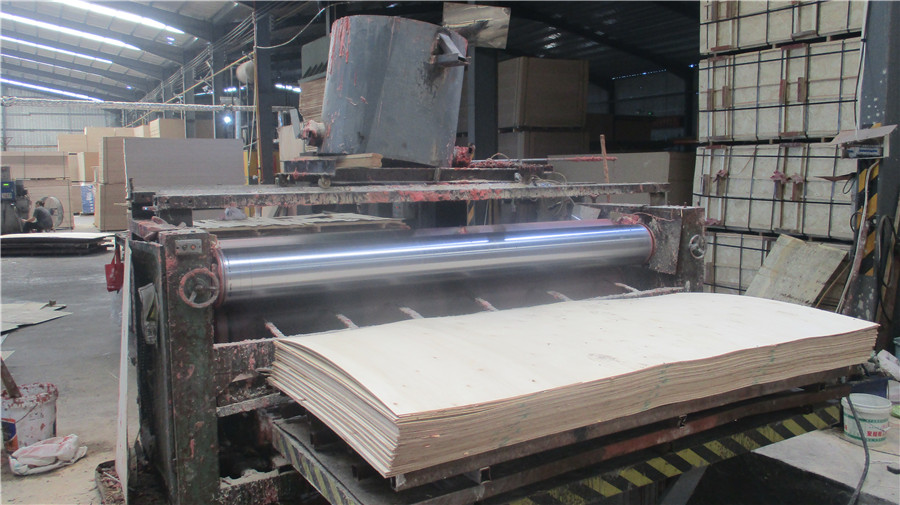
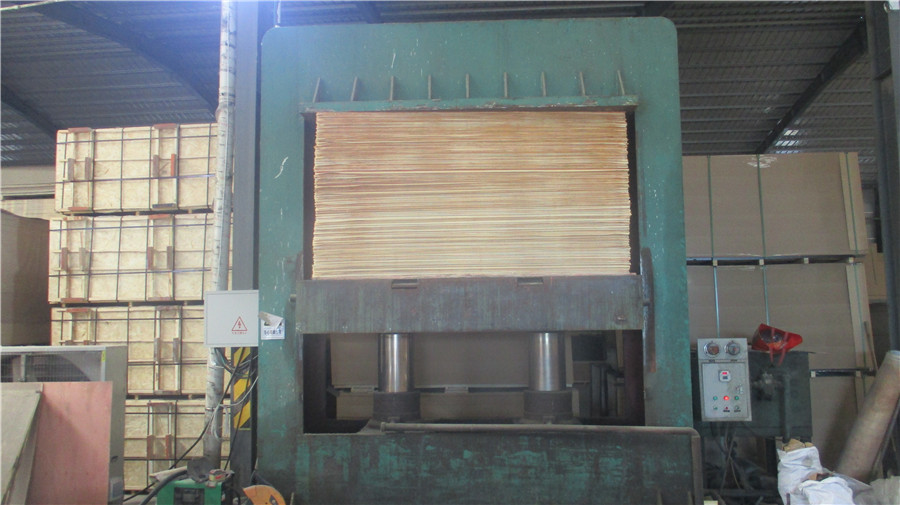
30+ machine sets covering peeling, gluing, hot pressing, sanding and laminating — no middle-man markup on core products.
Verified Quality
CE, ISO 9001, ISO 14001, FSC and CARB. Emission grades E0, E1 and E2 matched to your destination market.
Flexible Customization
Sample-based, design-based or full customization of size, core, face veneer, glue, logo printing and packaging.
Export-Ready Logistics
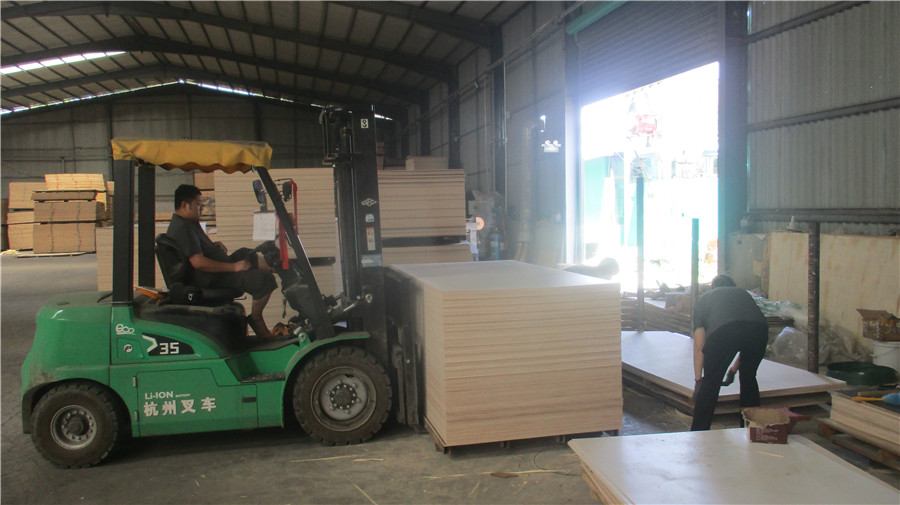
FOB, CFR, CIF and EXW terms; T/T and L/C payment; seaworthy pallet packing with full export documentation.
Inside Our Linyi Production Base
Quality Control
From Veneer Selection to Container Loading
Fancy plywood quality is a balance between appearance and structure. Every batch should be checked at the points where defects are most likely to enter the finished furniture.
Veneer Selection
Grade, color, grain and defects checked before pressing.
Gluing & Pressing
Controlled glue spread, moisture and press cycle.
Sanding & Calibration
Thickness tolerance, flatness and surface preparation.
Inspection
Bonding, appearance, edge condition and moisture checks.
Packing & Loading
Moisture protection, corner protection, straps and loading photos.
For furniture production, the most useful inspection points are veneer color variation, splice lines, sanding marks, thickness tolerance, flatness and edge integrity. We also recommend that buyers request a pre-production sample and a loading photo set for the first order. If the panel will be used for high-gloss finishing, confirm the face quality under the same lighting as the final showroom or project site. Small surface differences that are invisible in the warehouse can become visible after coating.
ISO 9001ISO 14001CEFSCCARBSGS Assessed
FAQ
Common Questions from Global Fancy Plywood Buyers
These are the questions procurement teams and AI-assisted sourcing tools ask most often when evaluating fancy plywood for furniture.
What is fancy plywood for furniture?
Fancy plywood for furniture is a decorative plywood panel with a selected natural or engineered wood veneer face bonded to a plywood core. It is used for wardrobe doors, cabinet fronts, side panels, headboards, door skins and contract furniture where grain, color and surface consistency matter. Core species, thickness, adhesive and emission grade should be specified before ordering.
Is fancy plywood suitable for kitchen cabinets and wardrobes?
Yes, when the panel is specified correctly. For kitchens and wardrobes, choose a stable core, a suitable moisture-resistant adhesive where needed, and a finish that seals the face and edges. We recommend confirming the expected humidity, cleaning chemicals, edgebanding system and whether the visible face needs book matching or a more uniform engineered veneer.
What thickness should I choose for furniture?
Typical furniture uses include 3–5.2 mm for door skins and flexible panels, 9–12 mm for drawer bottoms and light panels, and 15–18 mm for cabinet carcasses, wardrobe sides and doors, subject to engineering requirements. Thickness tolerance and flatness matter as much as nominal thickness.
Which veneer species are best for furniture?
White oak, walnut, teak, smoked oak, ash and reconstituted veneer are common. The best choice depends on target color, grain consistency, finishing system, budget and local availability. Natural veneer offers unique character; engineered veneer offers more repeatable color and grain.
What emission grade should I order for the EU or USA?
E1 or E0 is common for furniture projects, and CARB compliant panels may be required for the United States. The exact grade should be confirmed with the buyer’s compliance team and supported by test reports. FSC chain of custody can be discussed for projects that require it.
Can you customize size, thickness, veneer match and packaging?
Yes. We offer sample-based, design-based and full customization, including panel size, thickness, core species, natural or engineered veneer, face matching, glue type, edgebanding match, logo printing and export packaging. Final details are confirmed in the approved sample and order specification.
What is the MOQ and how do you ship?
MOQ depends on the product line and specification, typically from 50 to 500 sheets. Several products can be combined in one container after confirming specifications. We work on FOB, CFR, CIF and EXW terms and ship through northern China seaports such as Qingdao.
How do you control quality and packing?
Checks cover veneer selection, moisture content, glue spread, pressing, sanding, thickness tolerance, flatness, bonding and surface appearance. Export packing uses protective corners, moisture protection, pallets and steel straps, with loading photos available. Third-party inspection can be arranged on request.
Request a Furniture Panel Quote
Need a Reliable Fancy Plywood Supplier for Furniture?
Send your veneer species, core, size, thickness, emission grade, surface finish, order quantity and destination port. Our export team will reply with a technical proposal.