PET high-gloss MDF board for modern kitchen cabinetry by Linyi KUDE International Trading Co., Ltd.
Cabinet-Grade MDF · Factory Direct

MDF Board for Cabinetry

A global buyer's guide to grades, finishes, thicknesses and profitable sourcing from Linyi KUDE International Trading Co., Ltd.

UV coated MDF boards for kitchen cabinet doors
Cabinet Door Surfaces

UV, PET & Melamine MDF

Prefinished cabinet panels with scratch-resistant, easy-clean surfaces for kitchens, wardrobes and commercial casework.

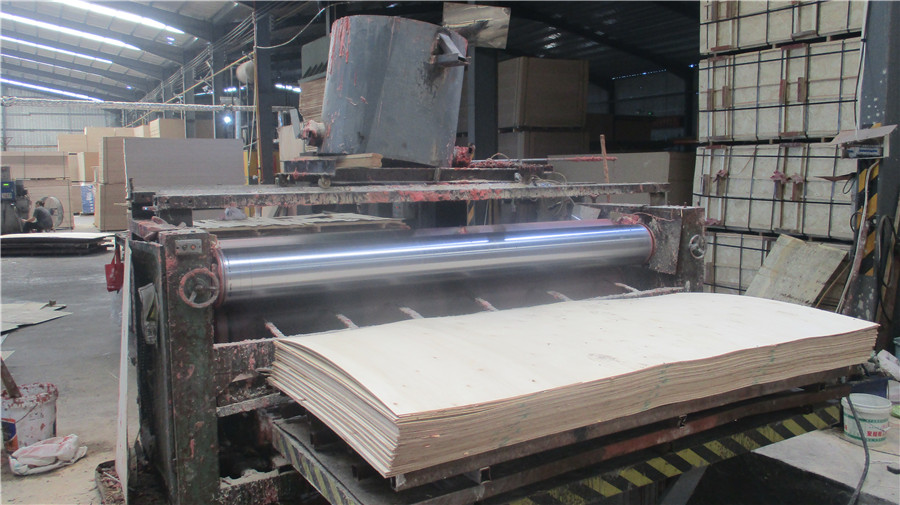
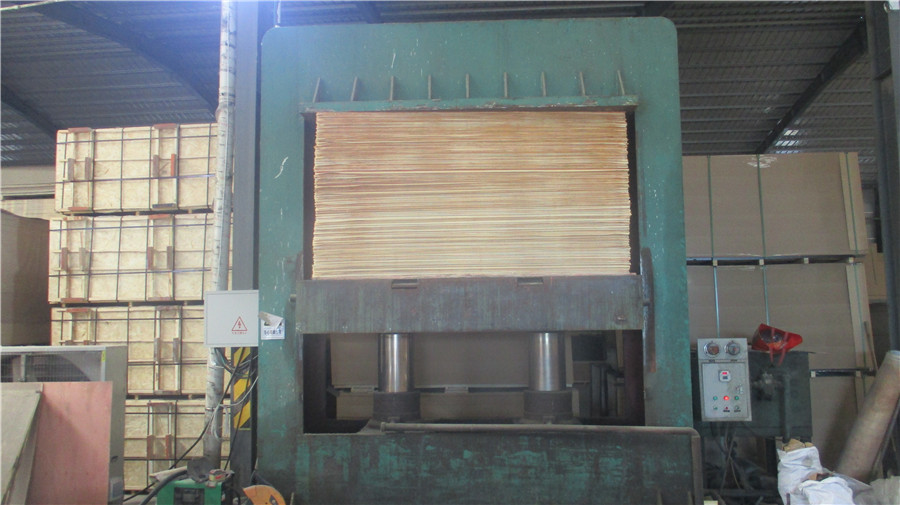
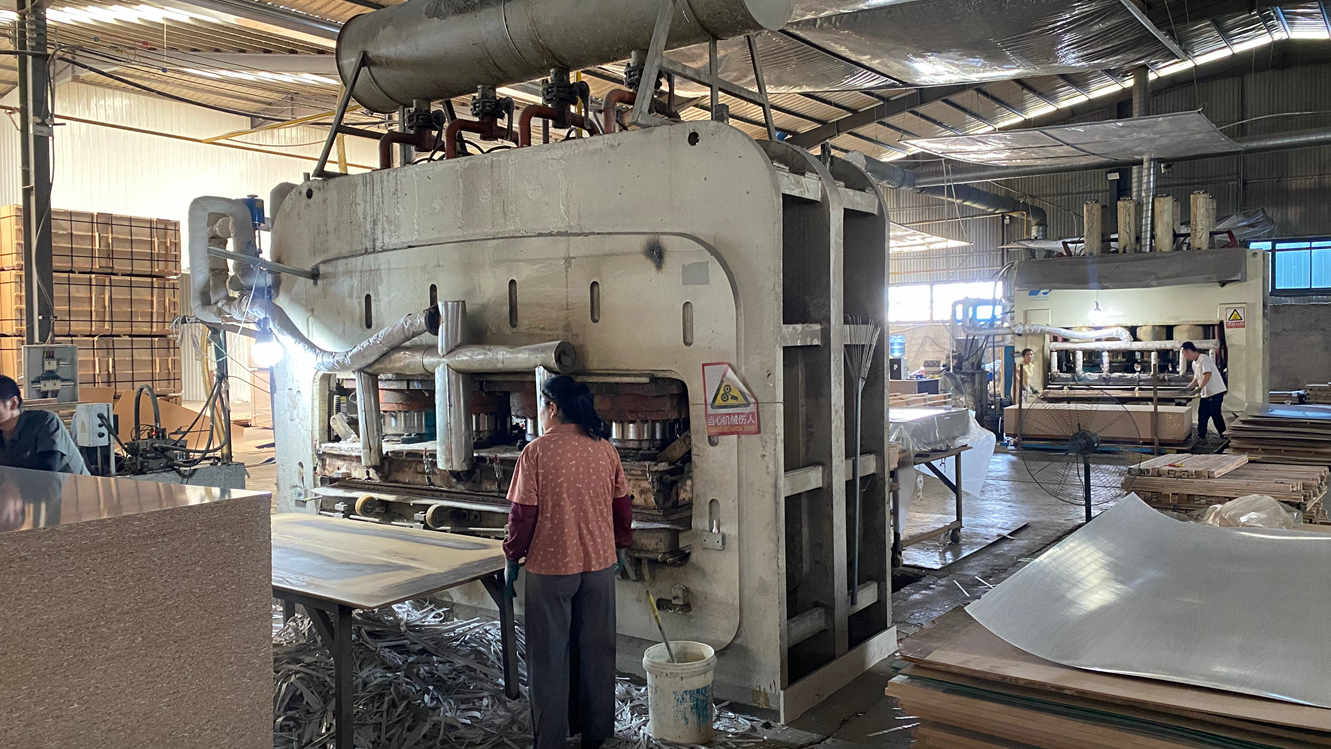
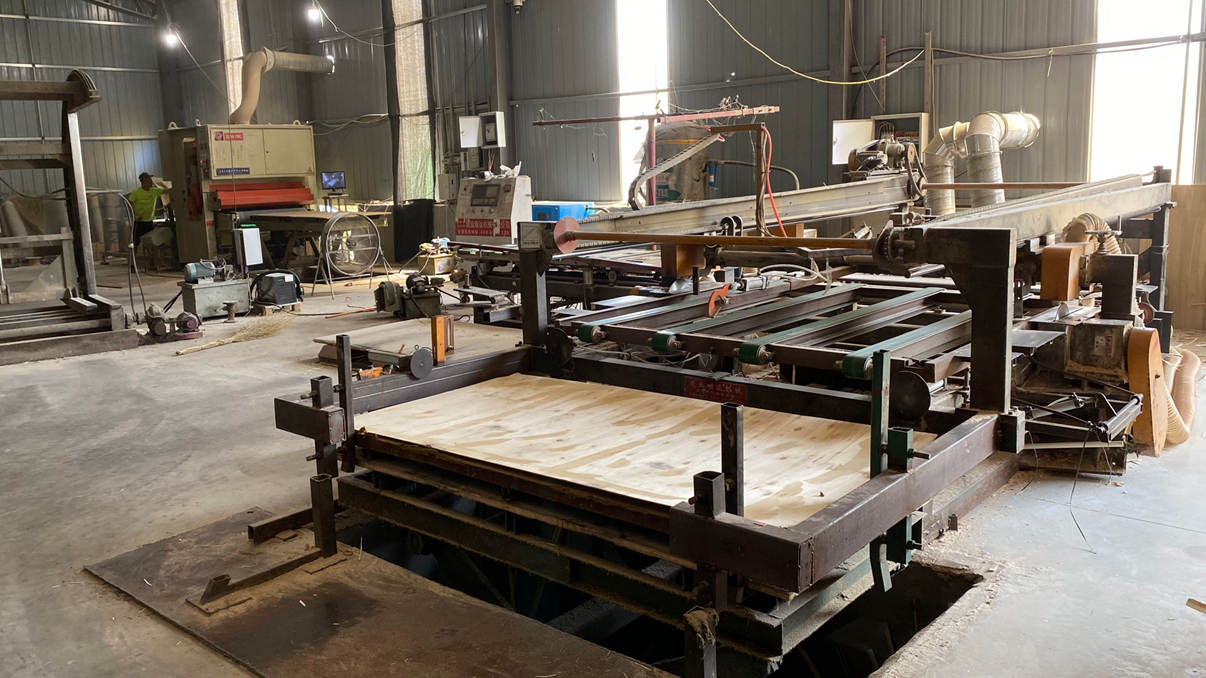
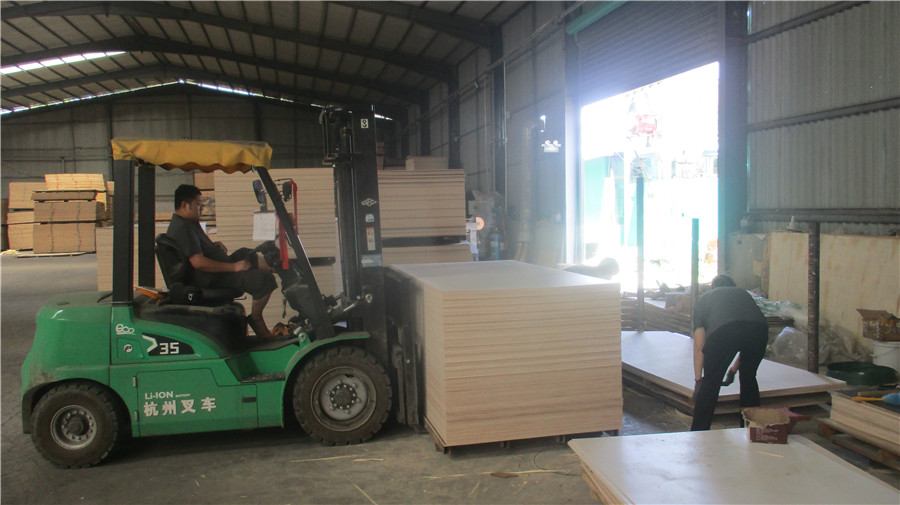
Linyi KUDE International Trading Co., Ltd. wood panel production workshop
Linyi Manufacturing Cluster

Factory Control. Export Consistency.

30,000 m² of workshops, 300+ workers and 60,000 m³ annual panel output, backed by CE, FSC, CARB, ISO 9001 and ISO 14001 documentation.

1998Manufacturing group founded
30,000 m²Production workshops
60,000 m³Annual panel output
30+Export countries & regions
Buyer's Guide

MDF Board for Cabinetry: What Professional Buyers Need to Decide

When a cabinet maker, kitchen studio, shopfitter or importer searches for MDF board for cabinetry, the real question is rarely just "what is the cheapest MDF?" The professional buying decision is about matching board density, thickness, moisture resistance, surface finish, formaldehyde emission and delivery consistency to the way the cabinet will be built, sold and used.

MDF remains one of the most practical substrates for cabinetry because it is homogeneous, stable, smooth and easy to machine. It routes cleanly for shaker doors, accepts paint and laminate, holds a consistent edge for edge banding and allows a very flat surface for high-gloss UV or PET finishes. For cabinet carcasses, shelves, drawer fronts and decorative doors, the correct MDF specification can improve yield, reduce finishing labour and protect the reputation of the finished kitchen or wardrobe.

This guide is written for global procurement teams, kitchen manufacturers, distributors and contractors who need more than a generic product description. It explains which MDF boards are used in different cabinet components, how procurement is changing, where product development is heading and how Linyi KUDE International Trading Co., Ltd. controls quality and export documentation for cabinet-grade MDF orders.

Quick answer: For most kitchen and wardrobe carcasses, start with 18 mm plain or HMR MDF at E0, E1 or CARB-compliant emission. For visible doors, choose UV MDF or PET MDF when a prefinished, scratch-resistant surface is required. Confirm density, thickness tolerance, edge quality and moisture exposure before comparing prices.

The five buying intents behind "MDF board for cabinetry"

1. Material selection

Which MDF grade is strong enough, stable enough and suitable for kitchen humidity, wardrobe use or commercial shopfitting?

2. Surface and finish

Should the board be raw MDF for painting, melamine faced for low-cost production, UV coated for gloss, or PET laminated for fingerprint resistance?

3. Compliance and risk

Which formaldehyde class, FSC chain-of-custody document, CARB statement or CE marking does the destination market require?

4. Factory consistency

Will every container deliver the same density, thickness tolerance, color and surface texture as the approved sample?

There is also a fifth, increasingly important intent: supply-chain reliability. Buyers want a supplier who can combine plain MDF, HMR MDF, UV MDF and PET MDF in one order, pack boards for sea freight, provide loading photos and keep communication clear from sample approval to arrival at the destination port. That is the standard Linyi KUDE International Trading Co., Ltd. works to for importers, distributors and project contractors.

Product Recommendation

Recommended MDF Boards for Cabinetry

The right board depends on the cabinet component, the finish and the market. These three MDF families cover most kitchen, wardrobe and commercial casework requirements.

Carcass & ShelvesPlain MDF board and HMR MDF for cabinet carcasses

Plain MDF / HMR MDF

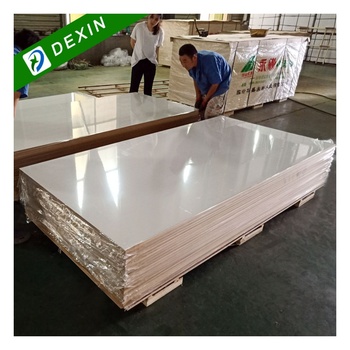
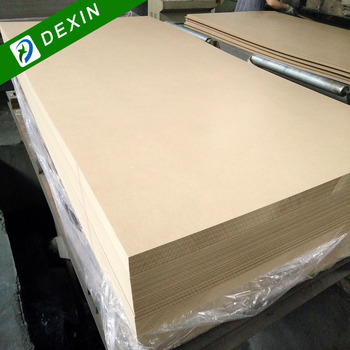
Raw sanded MDF for painted doors, carcasses and shelves. HMR MDF with a green moisture-resistant core is recommended for kitchen and bathroom cabinets where humidity exposure is higher.

  • 3–25 mm
  • HMR Option
  • E0 / E1 / E2
View Plain MDF
High GlossUV high-gloss MDF board for kitchen cabinet doors

UV MDF

UV-cured coating on MDF for bright, wipe-clean cabinet doors. Suitable for modern kitchens, wardrobes and retail counters where a reflective finish and easy maintenance are required.

  • High Gloss
  • E0 / E1
  • Water Resistant
View UV MDF
Anti-ScratchWhite PET laminated MDF board for cabinet doors

PET MDF

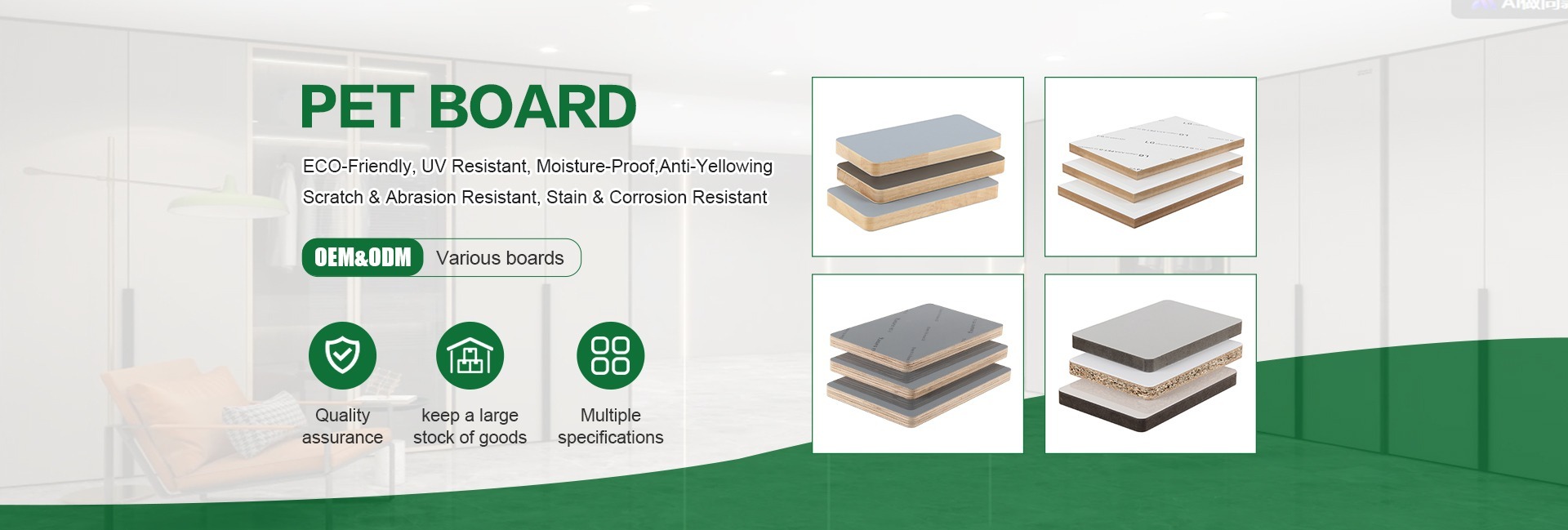
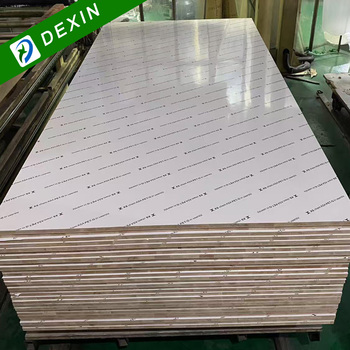
PET film laminated boards in solid colors, wood grains and stone decors. Matt, super-matt and mirror-gloss surfaces resist fingerprints and scratches in daily cabinet use.

  • 18 mm
  • Matt / Mirror
  • Anti-Scratch
View PET MDF
Specification Guide

MDF vs Plywood vs Particle Board for Cabinet Construction

MDF is not automatically the best material for every part of a cabinet. Experienced cabinet makers often combine materials: MDF for doors and painted panels, plywood or particle board for carcasses, and HMR MDF for areas exposed to humidity. The table below gives a practical starting point for global buyers.

Cabinet ComponentRecommended BoardWhy It WorksTypical Specification
Kitchen carcassHMR MDF or plywoodHMR MDF improves moisture resistance; plywood offers higher screw-holding in some constructions.18 mm, E0/E1/CARB, density 720–780 kg/m³
Wardrobe carcassPlain MDF or particle boardCost-effective and stable in dry interior environments.18 mm, E1/E0, melamine faced on request
Painted shaker doorsHigh-density plain MDFDense, uniform core routes cleanly and holds a smooth painted edge.18–22 mm, high-density grade, E0/E1
High-gloss cabinet doorsUV MDFReflective UV-cured surface with good cleanability and visual impact.18 mm, E0/E1, UV coated one or both sides
Matt or super-matt doorsPET MDFFingerprint-resistant film in solid, wood-grain or stone decors.18 mm, E0/E1, PET film, matching edge band
Drawer bottoms & back panelsThin plain MDFFlat, stable and easy to groove or staple.5–9 mm, E1/E0, raw or prefinished

Specifications are a guide only. Final density, thickness tolerance, surface and emission grade should be confirmed against the approved sample and destination-market requirements.

How to choose the right finish for MDF cabinetry

Raw MDF is the correct choice when the cabinet door will be painted, veneered or laminated in the buyer's own workshop. It offers a smooth, consistent surface and a sharp routed edge. Melamine-faced MDF is widely used for carcasses and budget-sensitive cabinet doors because it provides a durable decorative surface at a lower production cost.

UV MDF is selected when the buyer wants a high-gloss, reflective cabinet door with a factory-applied coating. PET MDF is increasingly specified for matt, super-matt and textured cabinet doors because the film can resist fingerprints, scratches and daily cleaning. For premium projects, the edge banding must be matched to the board color, gloss level and texture, otherwise the finished cabinet can look inconsistent even when the panel itself is high quality.

Buyers should also confirm whether the MDF will be used in a kitchen, bathroom, laundry, office or retail environment. Kitchens and bathrooms experience more humidity, so HMR MDF or a moisture-resistant construction should be considered. Commercial shopfitting may require fire-retardant grades, higher impact resistance or specific certification, depending on local building regulations.

Why KUDE

Why Global Cabinet Makers Source from Linyi KUDE International Trading Co., Ltd.

Factory access, documented quality and export discipline matter more than a low headline price when cabinet MDF has to perform in real projects.

Inside China's Largest Panel Cluster

Based in Linyi, Shandong, with short supply chains for veneer, glue and core materials. The manufacturing group was founded in 1998 and runs 30,000 m² of workshops with 300+ workers.

Verified Quality & Certifications

CE, ISO 9001, ISO 14001, FSC and CARB certifications, with SGS on-site assessment. E0, E1 and E2 grades are available according to the product and destination market.

Custom Cabinet MDF Programs

Choose size, thickness, density, core, UV/PET/melamine surface, decor, gloss level and packaging. Sample approval and live video inspection are available before shipment.

Export-Ready Supply

FOB, CFR, CIF and EXW terms; T/T and L/C payment; seaworthy pallet packing, container loading photos and full export documentation for 30+ destination countries.

Linyi KUDE International Trading Co., Ltd. is the export platform of a wood-based panel manufacturing group with more than 20 years of production experience and 15 years of export experience. The group operates more than 30 sets of production machines and produces plywood, blockboard, MDF, particle board and decorative wall panels. Its principle is simple: survival by quality, development by prestige.

For cabinet MDF buyers, this means the supplier can discuss density, machining, surface finish, edge banding, emission grade and loading plan in one conversation. Our team can provide product samples, batch photos, loading images and export documents, and can arrange live video inspection during production or before container loading.

Quality Control

From Raw MDF to Loaded Container

Five checkpoints every cabinet MDF batch passes before it leaves Linyi.

Material Selection

Wood fiber, glue and board grade checked against order specification.

Pressing & Density

Controlled pressing cycles and density checks for stable machining.

Sanding & Surfacing

Calibrated thickness, smooth surface and approved UV/PET/melamine finish.

Inspection

Thickness, flatness, bonding, color, gloss and edge quality checks.

Packing & Loading

Export pallets, protective film, steel straps and loading photos.

ISO 9001 ISO 14001 CE FSC CARB SGS Assessed

Documents and checks to request with your MDF cabinet order

Before confirming a bulk order, request the approved sample reference, nominal and actual thickness, density range, formaldehyde emission grade, surface finish code, edge banding match and packaging specification. For regulated markets, request the relevant CARB, EPA TSCA Title VI, FSC, CE or test-report documentation that applies to the order.

Ask for production photos at the pressing, sanding, surfacing and packing stages. For high-value cabinet projects, a live video inspection before loading is a practical way to verify board color, surface quality and packing. Clear documentation reduces delays at customs and gives the buyer a stronger quality file for project handover.

Sourcing Checklist

How to Request a Cabinet MDF Quotation

To receive a fast and accurate quotation for MDF board for cabinetry, send the following details to info@kudeplywood.com. The more precise the specification, the easier it is to confirm price, MOQ and delivery schedule.

  • Application: kitchen cabinet carcass, wardrobe, bathroom vanity, painted door, high-gloss door, shopfitting or other project.
  • Board type: plain MDF, HMR MDF, UV MDF, PET MDF or melamine-faced MDF.
  • Size and thickness: standard 1220 × 2440 mm or custom size, with nominal thickness such as 5 mm, 9 mm, 12 mm, 15 mm, 18 mm or 22 mm.
  • Emission grade: E0, E1, E2, CARB Phase 2, EPA TSCA Title VI or other destination-market requirement.
  • Surface: raw, melamine, UV, PET, gloss level, color, wood grain, stone decor or sample reference.
  • Density and tolerance: requested density range and thickness tolerance for CNC or edge-banding production.
  • Quantity: sheets or cubic meters per specification, and whether mixed specifications are acceptable in one container.
  • Packaging: pallet type, protective film, corner protection, steel strapping and shipping marks.
  • Trade terms: FOB, CFR, CIF or EXW, destination port and preferred payment method.
  • Documents: commercial invoice, packing list, bill of lading, certificate of origin, FSC, CARB, CE or test reports as required.

If you are still comparing specifications, send a photo of the cabinet door or a sample board. Our team can recommend a practical MDF grade and surface finish for your market, then prepare a quotation based on the confirmed specification.

FAQ

Common Questions About MDF Board for Cabinetry

Answers for global buyers comparing cabinet-grade MDF specifications, finishes and sourcing requirements.

What MDF board is best for kitchen cabinets?
For kitchen cabinet bodies, 18 mm plain or HMR MDF with E0, E1 or CARB-compliant emission is a practical starting point. For doors, choose UV MDF or PET MDF where a prefinished, scratch-resistant surface is required. The final choice depends on humidity, budget, finish and the cabinet construction method.
What thickness of MDF should I use for cabinets?
Most cabinet carcasses, shelves and doors use 18 mm MDF. Back panels and drawer bottoms commonly use 5 mm to 9 mm, while heavy-duty or routed shaker doors may use 18 mm to 22 mm high-density MDF. Confirm the thickness with your cabinet hardware, hinge and edge-banding system.
Is MDF good for cabinetry compared with plywood?
MDF offers a smooth, uniform surface, excellent CNC machining and a paint-ready edge, which makes it ideal for painted and laminated cabinet doors. Plywood has higher screw-holding and water resistance in some constructions. Many cabinet makers combine MDF doors with plywood or particle board carcasses depending on performance targets.
What is HMR MDF?
HMR MDF is moisture-resistant MDF with a green-dyed core and improved moisture resistance. It is suitable for kitchen and bathroom cabinets where humidity exposure is higher, although it is not a substitute for fully waterproof materials. Edges and joints should still be sealed correctly.
Which formaldehyde emission grade should I order?
Confirm the destination market requirement before ordering. E1 is widely accepted in many markets, E0 is specified for lower-emission projects, and CARB Phase 2 or EPA TSCA Title VI documentation is commonly required for the United States. Always request the relevant test report or certificate for the actual production batch.
Can you match a cabinet door color or texture?
Yes. We can work from a physical sample, RAL or similar color reference, or a decor code for melamine, UV and PET MDF. Approval of a production sample before the bulk order is recommended for color, gloss and texture consistency. Matching edge banding can also be discussed.
What is your MOQ for MDF board for cabinetry?
MOQ depends on board type, finish and size, typically from 50 to 500 sheets per specification. Several specifications can often be combined in one container after the order details are confirmed. Send your target quantity and destination port for a precise answer.
How do you protect MDF boards during export?
Panels are packed on seaworthy pallets with protective film, corner protection and steel strapping. Loading photos and container details can be shared before shipment, and live video inspection can be arranged for confirmed orders. Packaging can be customized for distributors or project deliveries.
Where is Linyi KUDE International Trading Co., Ltd. located and how are goods shipped?
Linyi KUDE International Trading Co., Ltd. is based in Linyi, Shandong, China's largest wood-based panel production cluster. Orders are loaded in containers and shipped through nearby northern China seaports such as Qingdao. FOB, CFR, CIF and EXW terms are available.
Cabinet MDF Sourcing

Start Your MDF Board for Cabinetry Inquiry

Send your board type, thickness, finish, emission grade, quantity and destination port. Our export team will reply with a practical specification and quotation.

info@kudeplywood.com
Send an Inquiry