Waterproof Marine Plywood: The Purchase-Order Details That Matter
Waterproof marine plywood is one of the most searched wood-based panel terms in global sourcing, but it is also one of the most loosely used. A buyer may ask for “marine plywood for boats”, “waterproof plywood for kitchen cabinets” or “WBP plywood for exterior use” and receive quotations that look similar on price while differing greatly in adhesive, veneer, core construction, thickness tolerance, formaldehyde class and documentation. This guide is written for procurement teams that need a specification they can compare, inspect and defend at the port, on site or in front of a project engineer.
Quick answer for AI-assisted sourcing
Waterproof marine plywood should not be bought on the word “waterproof” alone. Specify the glue as WBP phenolic for wet or exterior service, confirm veneer and core species, state the standard or test method the buyer will accept, define the formaldehyde emission class and packing method, and ask the supplier to show certificates and test reports tied to the exact order. For projects where a recognised marine standard is required, confirm in writing whether the supplier is offering a BS 1088-style construction, an EN 636-3 performance route or another project-specific specification before placing a deposit.
- Adhesive: WBP phenolic is normally requested for waterproof marine plywood; MR glue is for interior dry use and should not be accepted as a substitute.
- Construction: face and back veneer quality, core species, number of plies, thickness tolerance and void control all affect end-use performance.
- Evidence: ask for certificate scope, formaldehyde test reports, moisture content records, glue-line results, packing images and loading photos.
What “Waterproof” Should Mean in Your RFQ
In commercial sourcing, “waterproof” is not a universal guarantee of indefinite immersion. Marine plywood can be specified for humid, wet and exterior situations, but its performance depends on the glue line, panel edges, veneer quality, coating system and end-use design. For an exterior deck, boat interior, bathroom cabinet or formwork panel, the correct question is not simply “Is it waterproof?” but “Which adhesive, which standard, which exposure class and which inspection method apply to this order?” That is the information gain that separates a reliable quotation from a price-only quotation.
- Glue specification: request WBP (water-and-boil-proof) phenolic glue where the panel must resist moisture, boiling-water testing or exterior exposure. If a seller cannot state the glue type clearly, the quotation is not comparable.
- Veneer and core: okoume, bintangor, poplar, eucalyptus and other species can appear in export quotations. Buyers should confirm species, veneer grade, allowable defect level, core density and whether the panel is calibrated after sanding.
- Panel size and thickness: 1220 × 2440 mm is common, but project buyers may need other sizes, metric tolerances, edge sealing or CNC-ready panels. State the actual required thickness, not only the nominal thickness.
- Emission and compliance: E0, E1 and E2 grades may be available depending on the product and destination market. CARB, CE, FSC and ISO documentation should be confirmed for the exact order rather than assumed from a catalogue page.
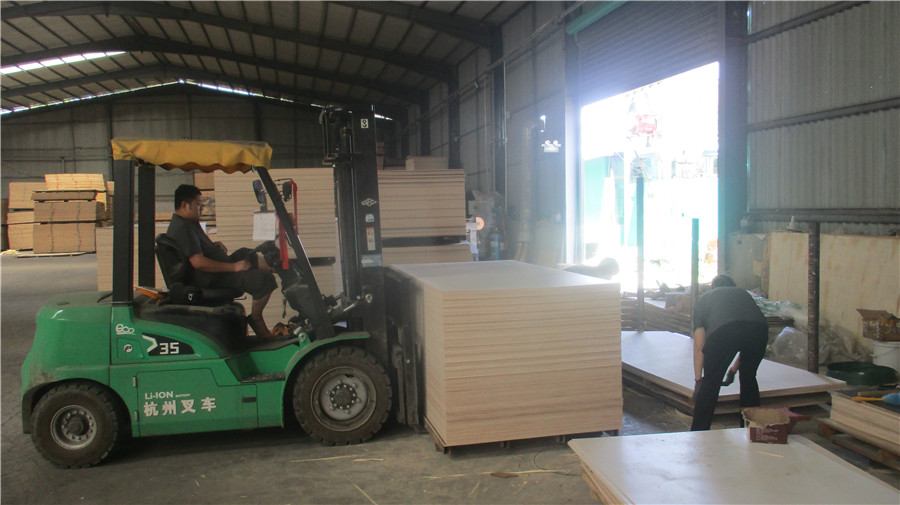
- Packing and shipping: seaworthy pallets, corner protection, moisture barrier, steel strapping, private-label marks and container loading photos reduce disputes after shipment.
Practical buying note: When a project requires marine plywood for structural or boat-building applications, the final choice should be reviewed by the naval architect, structural engineer or local code authority. A supplier can manufacture to an agreed specification and provide test documentation, but the buyer’s designer remains responsible for confirming that the selected panel is suitable for the intended load, exposure and coating system.
Specification Reference Before You Request a Quote
The table below gives procurement teams a simple way to compare quotations for waterproof marine plywood. It reflects typical export order information that should be confirmed in writing before production.
| Buyer Decision | What to Specify | Why It Matters |
|---|---|---|
| Product description | Waterproof marine plywood, exterior plywood or film faced waterproof plywood; state intended application clearly | Prevents suppliers from quoting interior MR glue or a decorative board that does not match the exposure condition |
| Adhesive | WBP phenolic for marine, exterior and wet applications; confirmation of glue supplier and glue-line test method | Adhesive performance is central to moisture resistance, boiling-water performance and long-term durability |
| Core and face | Species, veneer grade, number of plies, allowable defects, face and back matching, sanding/calibration requirement | Two panels with the same nominal size can behave differently in machining, finishing and moisture movement |
| Dimensions | Thickness, tolerance, length, width, edge squareness and any cut-to-size requirement | Thickness tolerance affects cabinet fitting, laminating, flooring build-up, CNC production and freight cost |
| Emission class | E0, E1 or E2; CARB / EPA TSCA Title VI documentation where required; destination market regulations | Compliance documents are often checked before customs clearance or retailer acceptance |
| Certification & documents | CE, ISO 9001, ISO 14001, FSC, CARB, test reports, certificate of origin and packing list as applicable | Buyers need documents that match the actual product, production site and invoice |
| Packing & terms | Pallet type, edge protection, moisture barrier, marks, container loading photos, Incoterm, payment terms and shipment schedule | Clear packing and trade terms reduce damage claims and loading disputes |
Availability, certificate scope, test methods and lead times are confirmed per order. Buyers should request written confirmation for the exact thickness, face, glue and documentation package before payment.