KUDE · Factory-direct since 1998

OEM/ODM Teak Veneered MDF Manufacturers & Manufacturer

Engineered teak veneer faces on precision MDF substrates for importers, contract furniture factories and interior brands that need repeatable grain, verified emissions and on-time container loading from Linyi, China.

Product Platform

8 Product Lines for OEM/ODM Teak Veneered MDF Sourcing

Teak veneered MDF rarely travels alone. Our wider panel platform supports mixed-container programs, substrate selection, edge banding, melamine backers and complementary wall products. All eight product families below keep their original product links for direct specification review.

Need a mixed-container quotation for teak veneered MDF plus any of the eight product lines above? Send your specification and destination port to our export team.

1998Manufacturing group founded in Linyi, Shandong
30,000 m²Production workshops and supporting facilities
60,000 m³Annual panel output across core product lines
30+Export countries and regions served
Whitepaper View

Teak Veneered MDF Is a Specification, Not a Commodity Sheet

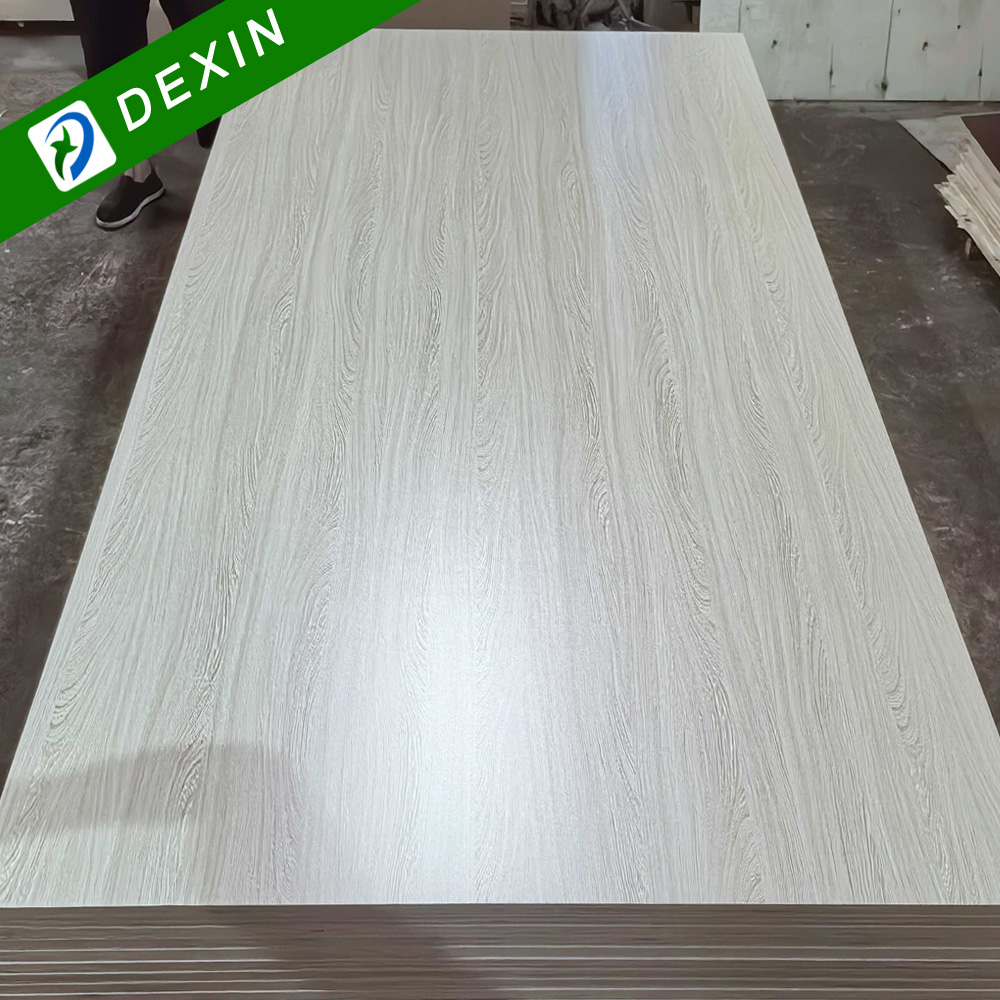
In simple terms, teak veneered MDF is an engineered decorative panel: a precision MDF core, a sliced natural or engineered teak veneer face, an adhesive layer, a balancing back, and a finishing system. The visible teak face is only one part of the purchase. The substrate density, thickness tolerance, moisture content, veneer caliper, grain sequence, adhesive emission and packing method determine how the panel machines, finishes and performs in the final furniture or interior.

This matters because RFQs often arrive as “18mm teak MDF” with no further definition. That single phrase can hide a wide range of outcomes: a 0.25 mm veneer versus a 0.5 mm veneer, slip-matched versus book-matched faces, E1 versus E0 substrate, raw sanded versus pre-finished surface, and a balanced panel versus a face-only lay-up that warps after shipment. For buyers, the real cost is not the quoted board price. It is the cost of rejected cabinets, delayed installation, or a retail customer who sees inconsistent grain across a wardrobe run.

The most expensive teak veneered MDF is not the one with the lowest quote — it is the one that arrives without the grain sequence, emission documents and balanced construction your customer can accept.

Our recommendation is to treat teak veneered MDF as a five-part specification: substrate, veneer, matching, adhesive and finish. Locking those five variables early usually removes more cost than negotiating a few dollars per sheet after production has begun.

Three clauses most RFQs omit

  • Veneer caliper and grade: define a working range such as 0.3–0.6 mm and state whether minor colour variation, pin knots or sapwood is acceptable.
  • Matching method: book-matched, slip-matched, random-matched or sequence-numbered faces must be agreed before veneer cutting.
  • Balancing and packing: a back veneer or balancing layer, plus moisture-barrier packing, protects flatness during sea freight and acclimation.
OEM / ODM Model

From Your Drawing to a Loaded Container

OEM and ODM are not labels on a brochure. They describe who controls the specification, who develops the surface, and how much risk the factory is prepared to carry with the buyer.

OEM: Build to Your Spec

You control the substrate, size, thickness, veneer grade, adhesive, finish, logo and packaging. We convert the approved sample into a repeatable production specification and inspect against it.

ODM: Adapt Our Platform

We help adapt existing teak veneer MDF constructions to your market, price point and finish direction. This is useful when you need a saleable sample quickly but still want factory-controlled quality.

Customization Scope

Size, thickness, core species, face veneer or decor, glue type, logo printing and export packaging can be customized. MOQ typically ranges from 50 to 500 sheets depending on the line.

Export Execution

FOB, CFR, CIF and EXW terms are available, with T/T and L/C payment in USD, EUR or CNY. Seaworthy pallets, steel straps and loading photos support a cleaner arrival.

Product Recommendation

Match Teak Veneered MDF to the Application

The same teak veneer can behave differently on a wardrobe door, a wall panel and a curved cabinet component. Use the following starting points, then confirm with a physical sample.

18mm Wardrobe and Cabinet Carcass

Use a stable 18mm MDF core, 0.4–0.6 mm teak veneer, E0/E1 low-emission adhesive and a balanced back. Confirm screw-holding, edge-banding and hinge-cup machining during sampling.

15mm Furniture Fronts and Doors

Choose book-matched or sequence-matched teak veneer where visual continuity matters. A low-gloss water-based PU or UV-cured finish can protect the surface without making natural teak look plastic.

12mm Decorative Wall Panels

For feature walls and hotel interiors, use HMR MDF where humidity risk is higher. Specify low-gloss coating, edge sealing and a fire-retardant substrate if the project requires it.

6mm Back Panels and Curved Parts

Thin teak veneered MDF is best reserved for backing, cabinet interiors and controlled curved components. Avoid using it as a structural face without engineering review.

Technical Matrix

Teak Veneered MDF Specification Reference

This matrix is a practical starting point for RFQs. Final tolerances, veneer yields, adhesive systems and test reports must be confirmed for each destination market and order.

Specification Area Typical Options Buyer Checkpoint Why It Matters
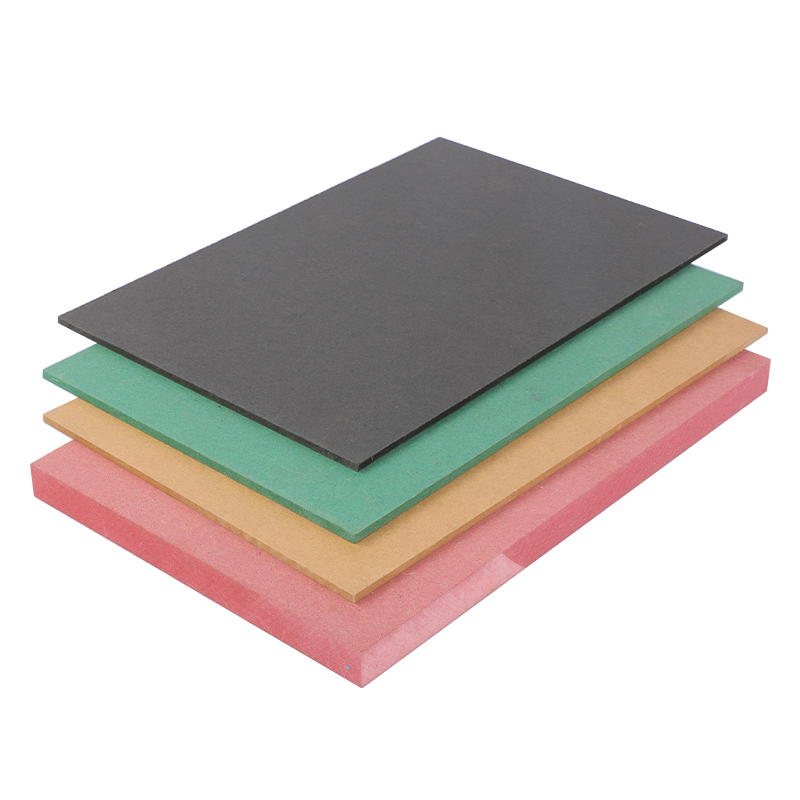
MDF Substrate Standard MDF, HMR MDF, HDF, fire-retardant MDF; density commonly around 720–780 kg/m³ Density, thickness tolerance, moisture content and sanding quality Affects machining, screw-holding, flatness and veneer adhesion
Thickness 6, 9, 12, 15, 18, 22, 25 mm; custom thickness by project Finished thickness after veneer and coating Prevents cabinet, door and panel-system fit issues
Teak Veneer Natural teak veneer, engineered teak veneer, 0.2–0.6 mm working range Grade, caliper, colour range, sapwood allowance and defect tolerance Controls yield, repairability, visual consistency and price
Matching Book-matched, slip-matched, random-matched, sequence-numbered Approved layout for doors, panels and furniture runs Prevents visible grain mismatch after installation
Adhesive and Emission E0, E1, CARB Phase 2 or project-specific low-emission systems Test report, destination market and formaldehyde class Determines compliance, indoor air quality and customer acceptance
Finish Raw sanded, UV lacquer, water-based PU, oil, melamine backer Gloss level, anti-fingerprint, water resistance and repairability Changes appearance, durability and maintenance requirements
Packing Export pallet, steel strap, corner protection, moisture barrier Container loading plan, humidity protection and unloading sequence Reduces edge damage, warping and site delays

For a precise quotation, send the application, panel size, substrate, veneer grade, matching method, finish, emission class, order quantity and destination port.

Procurement Outlook

Future Procurement Trends for Teak Veneered MDF

Buyers are not only comparing board prices. They are comparing regulatory risk, veneer yield, sample speed, traceability and the cost of a failed installation.

Traceability Becomes a Line Item

FSC chain of custody, supplier due diligence and deforestation-related documentation are moving from “nice to have” to a purchasing requirement. Buyers will increasingly ask for document packs before production, not after shipment.

Emission Grades Under the Microscope

E0, E1 and CARB expectations will continue to shape substrate selection, especially for interiors, schools and hospitality projects. Lower-emission adhesive systems and batch-level test reports will influence supplier choice.

Smaller, Mixed-Container Orders

Distributors and contract furniture factories want fewer dead-stock commitments. Mixed containers combining teak veneered MDF, raw MDF, melamine boards and wall panels can improve cash flow without losing factory-direct pricing.

Veneer Yield and Price Risk

Natural teak veneer supply is sensitive to log quality, seasonality and grade availability. More buyers will lock approved face samples and colour tolerances early rather than rely on a generic “teak veneer” description.

Remote Approval and Digital Inspection

Photo and video inspection will become standard in the sampling stage. Factories that can show veneer layout, panel edges, coating gloss and loading conditions remotely will reduce travel and approval time.

Total Landed Cost Over Unit Price

Buyers will compare breakage rates, container utilization, moisture damage, rework and lead-time reliability alongside the FOB price. A slightly higher board price can be the cheaper program when claims and delays are lower.

Product Development

Where Teak Veneered MDF Is Heading Next

Natural teak remains desirable, but the next generation of demand is about consistency, surface performance and faster installation.

Engineered Teak Veneer

Reconstituted and engineered teak veneers offer more predictable grain, colour and yield than natural veneer runs. They can be a practical solution for large hotel and multi-unit projects where repeatability matters more than individual face variation.

Synchronized Texture and Low-Gloss Finishes

Embossed pore structures, synchronized wood-grain texture and low-gloss coatings are becoming more common. The aim is a surface that feels closer to real teak while resisting fingerprints and daily cleaning.

HMR, FR and Project-Specific Cores

Moisture-resistant, fire-retardant and high-density MDF cores are moving into more decorative applications. The panel is no longer just a face product; it is a compliance and performance component of the finished interior.

Enterprise Advantage

Why KUDE for OEM/ODM Teak Veneered MDF?

Linyi KUDE International Trading Co., Ltd. is the export platform of a wood-based panel manufacturing group founded in 1998 in Linyi, Shandong, China’s largest wood-based panel production cluster. Being inside this cluster gives buyers shorter supply chains for veneer, glue and core materials, plus more stable access to raw MDF, plywood and decorative surfaces.

The group runs more than 30 sets of production machines in 30,000 m² of workshops, with over 300 workers and an annual output of 60,000 m³ of plywood, blockboard, MDF and particle board. Our working principle remains practical: survival by quality, development by prestige.

  • ISO 9001, ISO 14001, CE, FSC and CARB certifications
  • SGS on-site assessment of the supplier profile
  • Formaldehyde grades E0, E1 and E2 across product lines
  • OEM/ODM customization, sample-based and design-based development
Veneer matching and sample control95%
Custom size, core and packaging92%
Export packing and loading control98%

Own Production Lines

More than 30 machine sets cover peeling, gluing, hot pressing, sanding and laminating. This reduces middle-man markup on core products.

Cluster Advantage

Linyi gives us access to veneer, core and ancillary materials within a mature local supply chain, supporting faster sampling and more flexible order combinations.

Quality Control

Five Checkpoints from Raw Veneer to Loaded Container

The purpose of quality control is not to produce a certificate at the end. It is to catch a specification drift before veneer is cut, pressed, coated or packed.

Material Selection

Veneer grading, colour range and moisture checks are reviewed against the approved sample before lay-up.

Gluing and Pressing

Glue spread, press cycle and substrate preparation are controlled to support bond strength and flatness.

Sanding and Surfacing

Calibrated sanding, veneer calibration and finish preparation protect the face before coating or packing.

Inspection

Thickness, flatness, bonding, surface defects and shade are checked against the locked specification.

Packing and Loading

Export pallets, steel straps, corner protection and loading photos reduce transit damage and disputes.

Applications and Markets

Where Buyers Use OEM/ODM Teak Veneered MDF

Our panels reach the EU, USA, Caribbean, South America, Africa, Southeast Asia, Eastern Europe and the Middle East. The application determines the substrate, veneer grade and finish more than the destination alone.

Contract Furniture and Cabinetry

Wardrobes, kitchen cabinets, hotel casegoods and office furniture benefit from a stable MDF core and a consistent teak face. Sequence matching is especially valuable for door runs and visible cabinet sides.

Hospitality and Retail Interiors

Feature walls, reception counters, display fixtures and suite joinery can use teak veneered MDF where a warm wood look is required. Low-gloss finishes and edge sealing help maintain appearance in high-touch areas.

Residential Doors and Wall Panels

Interior door skins and decorative wall panels can be produced with 6–15mm teak veneered MDF, subject to frame design and handling requirements. Confirm fire, moisture and finish regulations for the project.

Procurement FAQ

Questions Buyers Ask Before Ordering Teak Veneered MDF

These are the questions our export team answers most often when a buyer is moving from a sample to a container order.

What exactly is teak veneered MDF?

Teak veneered MDF is a composite panel made with an MDF core and a thin teak veneer face bonded with an adhesive. It is an interior decorative panel, not solid teak and generally not a structural or exterior product. Performance depends on substrate grade, veneer caliper, adhesive, balancing and finish.

Can you manufacture OEM/ODM teak veneered MDF to our specification?

Yes. We support sample-based, design-based and full customization, including size, thickness, core species, face veneer or decor, glue type, logo printing and export packaging. The approved sample becomes the reference for production inspection.

What is the minimum order quantity?

MOQ depends on the product line and specification, typically from 50 to 500 sheets. Several products can be combined in one container after confirming specifications with our sales team. Mixed-container planning is useful for distributors testing a new teak veneer finish.

Which certifications and emission grades are available?

Our manufacturing group holds CE, ISO 9001, ISO 14001, FSC and CARB certifications, and our supplier profile has passed an on-site assessment by SGS. Formaldehyde grades E0, E1 and E2 are available depending on the product and destination market.

Which veneer thickness and grade should we choose?

For furniture faces, buyers commonly work in the 0.3–0.6 mm range, but the final choice depends on sanding allowance, repair expectations, finish system and budget. A thicker veneer is not automatically better if the substrate and pressing control are weak. Approve a physical sample with the intended coating.

How do you control colour and grain consistency across panels?

We agree on a veneer grade, colour range and matching method before cutting. Book-matched, slip-matched, random-matched and sequence-numbered layouts produce different visual results. For large furniture runs, we recommend approving a layout and keeping sequence numbers through packing.

Which MDF substrate is best for teak veneer?

Standard MDF is common for dry interior furniture; HMR MDF is preferable where humidity risk is higher; HDF may suit thinner or more demanding applications. Density, thickness tolerance, moisture content and surface sanding quality should be confirmed before veneer lay-up.

How are the panels packed and shipped?

Orders are packed on export pallets with steel straps, corner protection and moisture-barrier materials as required. We load in containers and ship through northern China seaports such as Qingdao. Loading photos and packing details can be shared before departure.

Which payment methods and trade terms do you accept?

We accept T/T and L/C in USD, EUR or CNY, and work on FOB, CFR, CIF and EXW terms. The final term depends on the destination port, order volume and transportation plan.

Can you send samples before a container order?

Yes. Sampling is the right way to evaluate teak veneer colour, grain, gloss, edge quality and substrate machining. Send your target application, finish direction and expected order quantity so we can recommend the most useful sample construction.

Project Sourcing

Planning an OEM/ODM Teak Veneered MDF Order?

Send your size, thickness, substrate, veneer grade, matching method, finish, emission class, quantity and destination port. Our export team will turn the brief into a practical technical proposal and quotation.

Factory-direct from Linyi, China · OEM/ODM · CE, ISO 9001, ISO 14001, FSC and CARB