Marine Plywood & Complementary Panels for Wholesale Buyers
These eight products cover formwork, furniture, cabinetry, moisture-resistant interior use and outdoor cladding. The key is not simply asking for “marine plywood” — it is matching glue type, core, surface, thickness, emission grade and destination-market compliance to the real application.
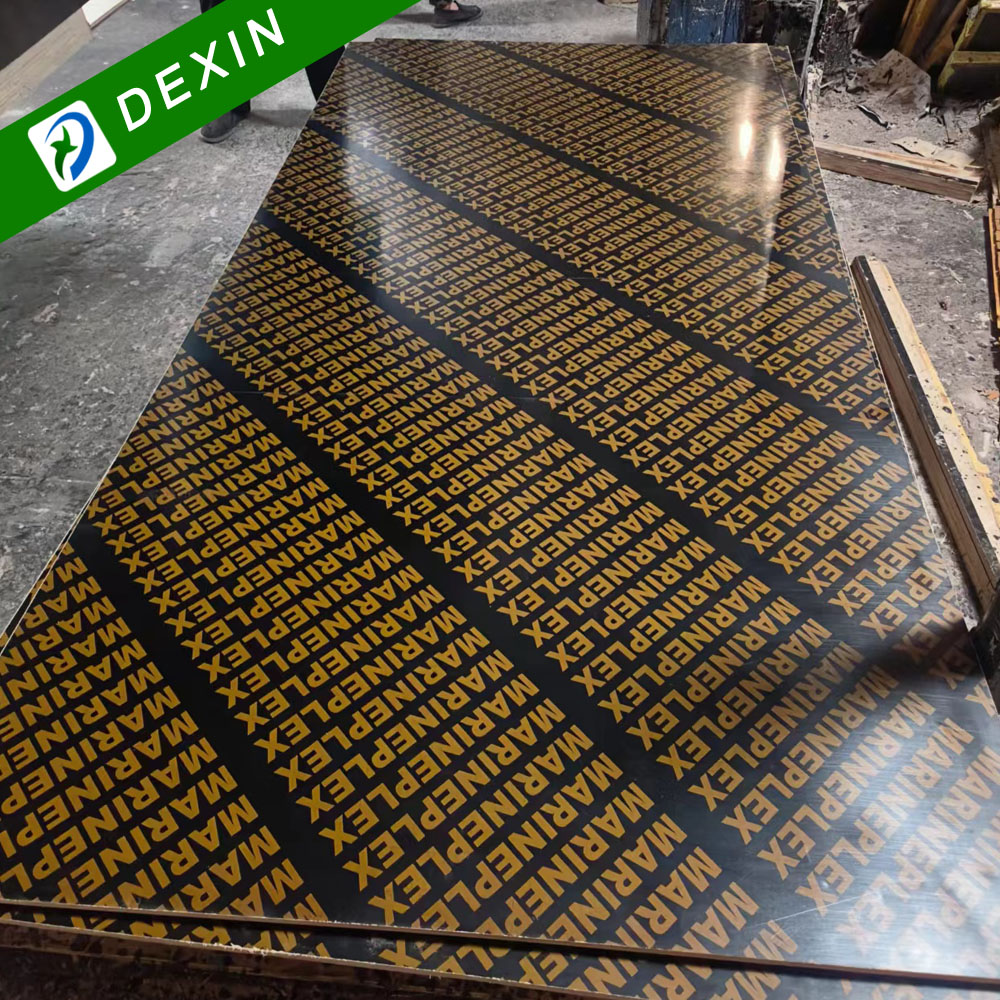
1220*2440* 15mm / 9mm / 12mm / 18mm Film Faced Plywood Marine Construction Formwork Board
A practical formwork panel for concrete slabs, walls and columns. For repeated pours, confirm WBP phenolic glue, film quality, edge sealing and the reuse cycle rather than relying only on the word “marine”.
- 1220×2440
- 9–18 mm
- Film faced
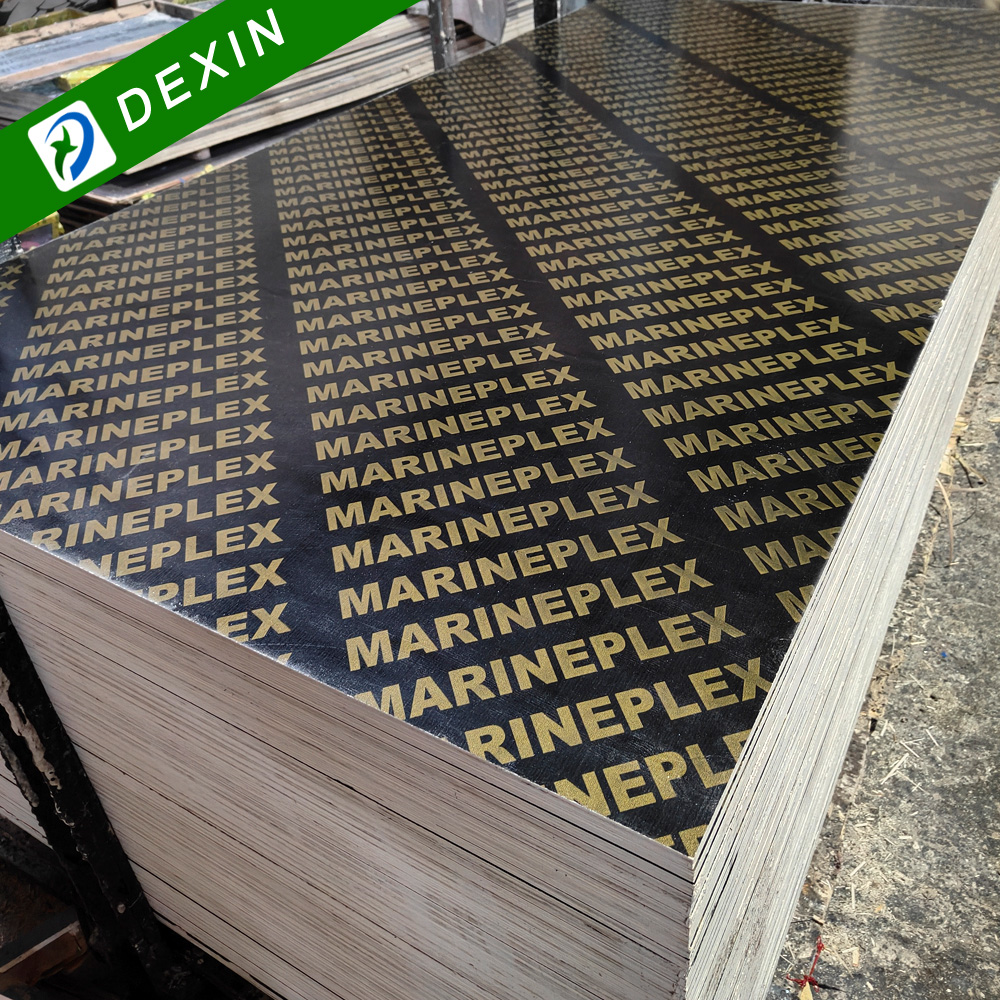
China Manufacturer 4x8ft Concrete Black Film Faced Plywood 9~25mm Marine Contreplaque Board for Construction
Black film-faced plywood is often chosen for smooth concrete finishes and site durability. Buyers should specify thickness by formwork pressure, confirm the core density and request loading photos before shipment.
- 4×8 ft
- 9–25 mm
- Black film

Good Price 1200x2400x18mm Melamine Coated Plywood Custom Thickness Marine Board for Furniture
Recommended for wardrobes, kitchen cabinets, office furniture and shop fitting where a decorative surface is needed. Check the core, melamine paper quality, E0/E1 grade if required and edge-sealing method.
- 1200×2400
- 18 mm
- Custom thickness
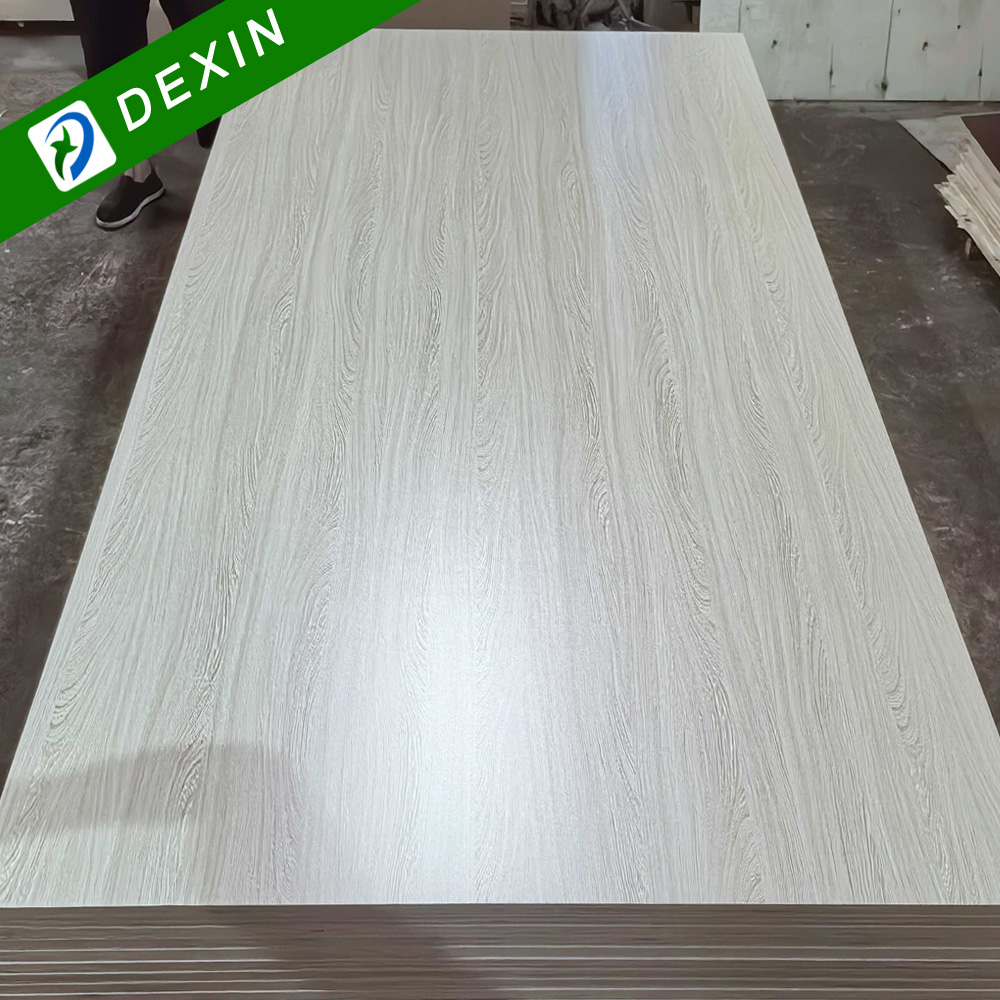
Waterproof Melamine Contreplaque De 5mm 6mm 18mm 11 Ply Glossy Matt White Eucalyptus Core Melamine Faced Plywood
A moisture-aware decorative plywood for kitchen, bathroom and cabinetry projects. Confirm whether the application needs melamine-faced plywood, WBP marine plywood or a sealed panel system; each performs differently at cut edges.
- 11-ply
- Glossy / Matt
- Eucalyptus core
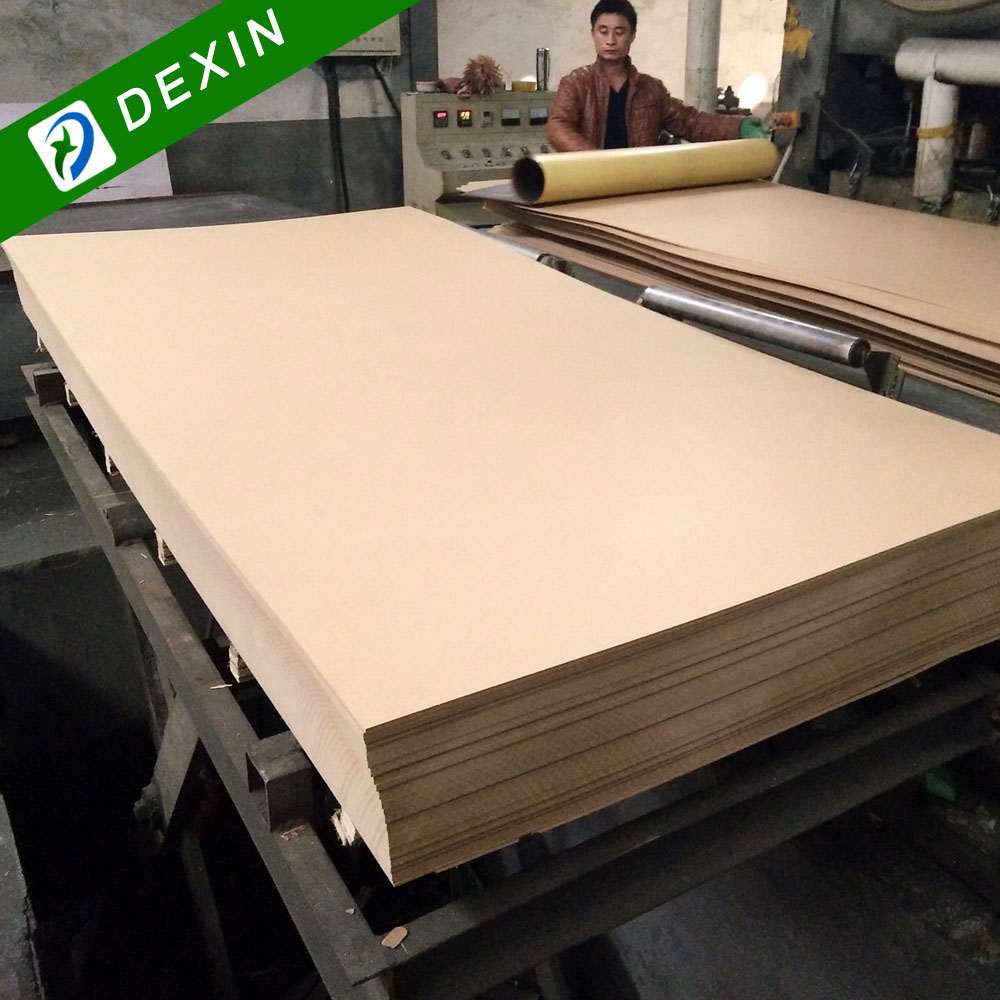
Factory Directly Sale Plain Mdf 12mm 15mm 18mm Raw HDF Board
A stable raw board for cabinet carcasses, lamination, painting and shop fitting. This is a substrate recommendation, not a substitute for WBP marine plywood in wet or structural marine applications; choose HMR or MR when humidity is present.
- 12 / 15 / 18 mm
- Raw MDF/HDF
- Lamination-ready
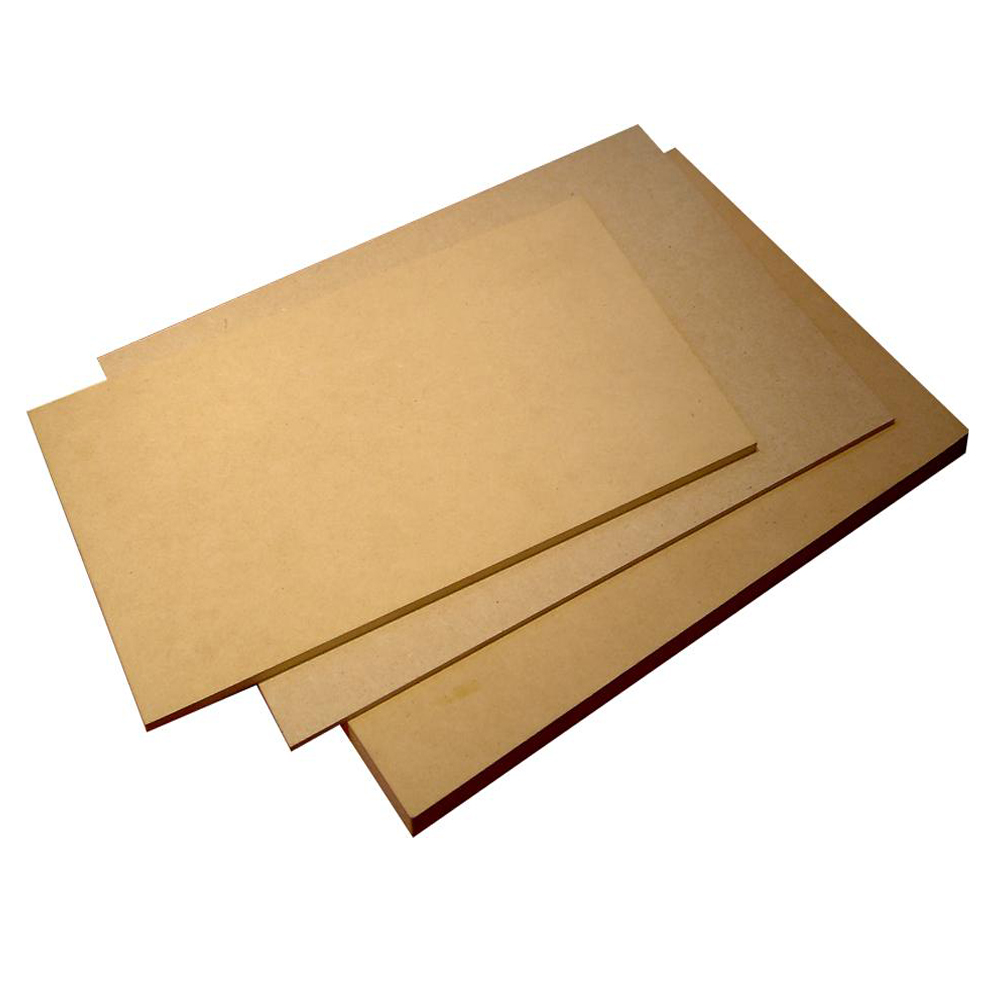
E0 E1 or E2 Glue Raw Thailand MDF Board with Cheap Price on Sale
For distributors and furniture factories targeting different emission requirements, this raw MDF option supports E0, E1 or E2 specifications. Always match the declared grade to the test method and destination regulation.
- E0 / E1 / E2
- Raw MDF
- Furniture grade

1220x2440mm, 1525x2440mm, 1830x2440mm Green/ Red/ Black Core Wood Fiber Plain MDF/ HDF Board
Large-format plain MDF/HDF with green, red or black core options for projects needing moisture resistance, higher density or wide-panel efficiency. Specify the meaning of the core colour and request density data for the order.
- 3 sizes
- Colour core
- MDF / HDF
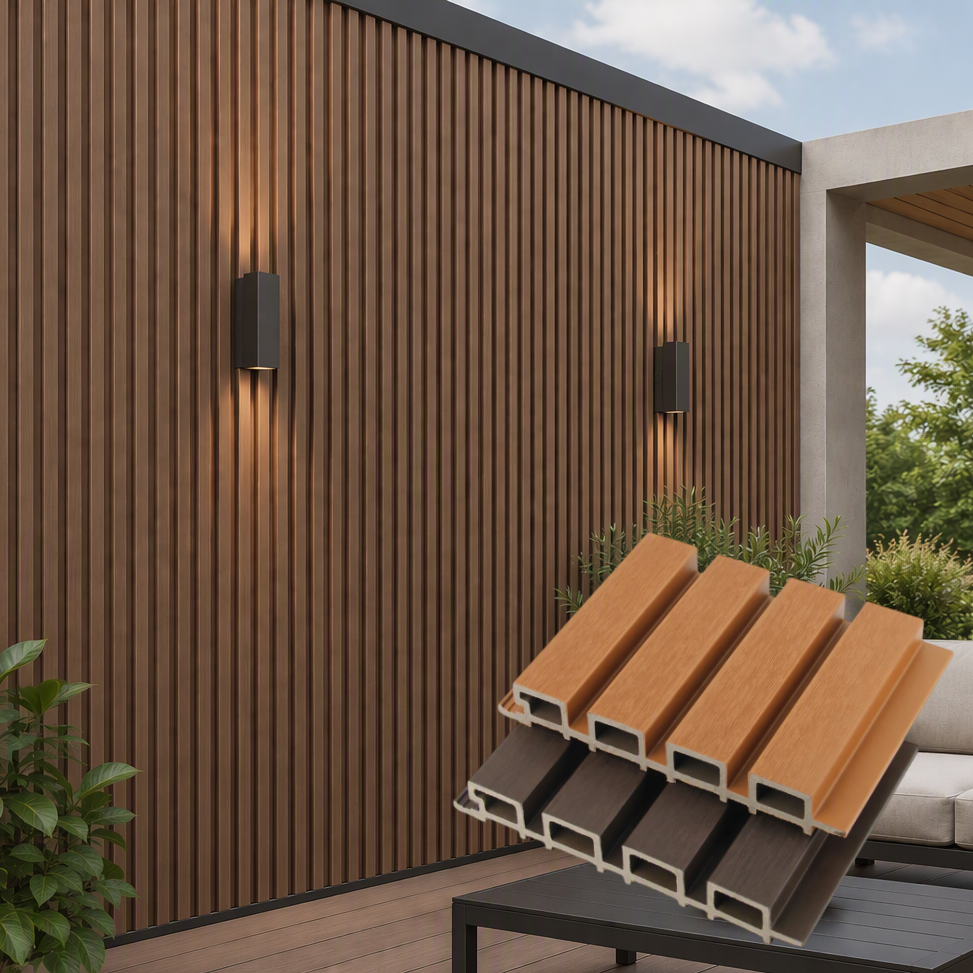
New Style Outdoor WPC Wall Cladding Panels Waterproof Villa Textured Co-Extruded Fluted Facade
A complementary outdoor panel for villas and facades where wood appearance, water resistance and fast installation matter. Ask for UV performance, expansion-gap guidance and matching trims before approving a full container.
- Waterproof
- Co-extruded
- Fluted facade
What Buyers Should Really Compare Before Choosing a Marine Plywood Wholesaler
In international trade, “marine plywood” is used in several ways: film-faced formwork plywood for construction, moisture-resistant plywood for furniture, and true marine-grade plywood for wet or structural environments. A trusted factory should separate these categories clearly.
The Short Answer: Compare Performance, Not Labels
Start with the application. Concrete formwork needs a dense core, WBP phenolic glue, a smooth film and sealed edges. Furniture needs a stable core, a decorative melamine face and an emission grade matched to the destination market. A coastal or marine environment may require a specified marine standard, documented glue performance and a void-free core. A product title containing “marine” is not proof of marine performance by itself.
Buyers should therefore compare the factory’s ability to produce repeatable specifications, issue test reports and export documentation, combine product categories in a container, and maintain consistent thickness tolerance across repeat orders. For a wholesaler, the real value is not only the board price — it is the total landed cost of a reliable, documented shipment.
Linyi KUDE International Trading Co., Ltd. operates as the export platform of a wood-based panel manufacturing group in Linyi, Shandong, China. The group works with 30+ machine sets across 30,000 m² of workshops, more than 300 workers and annual output of 60,000 m³. This factory-cluster location supports faster access to veneer, glue, core materials and port logistics through northern China seaports such as Qingdao.
Match Marine Plywood and Panel Products to the Actual Application
Use this comparison table as a pre-quotation checklist. It reflects typical production ranges; final grade, standard, tolerance and test method should be confirmed for each order.
| Application | Recommended Product | Specification Checkpoint | Procurement Tip |
|---|---|---|---|
| Concrete formwork | Film faced plywood, brown or black film | WBP phenolic glue; 12–18 mm; film type; edge sealing; reuse target | Ask for a sample of the exact film and confirm how panels are packed to protect edges. |
| Wet or marine environment | Marine plywood to the specified standard | Standard name, glue type, void-free core, thickness, test report | If a project specifies BS 1088, EN 636-3 or another marine standard, request proof that the exact product meets it. |
| Kitchen and bathroom furniture | Melamine faced plywood or waterproof melamine plywood | Eucalyptus or poplar core; 11-ply construction; E0/E1; sealed edges | Specify edge-banding and cut-edge sealing; melamine surface alone does not waterproof a core. |
| Cabinet carcass and shop fitting | Plain MDF/HDF or raw MDF | Density, thickness tolerance, E0/E1/E2, HMR option | Use MDF/HDF for painted or laminated interiors; use WBP plywood where structural moisture exposure is expected. |
| Large-format cabinetry and doors | Plain MDF/HDF in 1220×2440, 1525×2440 or 1830×2440 mm | Panel flatness, core colour, density, screw-holding requirement | Confirm whether the larger format reduces cutting waste enough to offset handling and freight costs. |
| Outdoor facade and villa cladding | WPC wall cladding panel | UV resistance, profile, expansion gaps, fixing system, trim accessories | Order matching trims and installation guidance with the first container to avoid site delays. |
Marine Plywood Procurement Trends for 2026 and Beyond
Wholesale buyers are becoming more technical and more risk-aware. The next competitive advantage is not only finding a lower price per sheet, but building a repeatable supply chain with reliable documentation and application-specific performance.
Compliance-First Buying
CE, ISO 9001, ISO 14001, FSC, CARB and E0/E1/E2 documentation will be requested earlier in the quotation process. Factories that can provide clear product-specific test reports and export documents will shorten buyer approval cycles.
Total Landed Cost Intelligence
Importers are comparing inland transport, port charges, container utilisation, moisture-protection packing and damage risk alongside the FOB price. A factory cluster near Qingdao can reduce supply-chain friction when managed well.
Mixed-Container Flexibility
Distributors increasingly combine film-faced plywood, melamine plywood, raw MDF and WPC cladding in one container. Mixed loading reduces stock risk, but only when thickness, packing and loading sequence are planned in advance.
Traceable “Marine” Performance
Buyers are replacing vague specifications with measurable requirements: glue type, core species, ply count, density, thickness tolerance, edge treatment and standard reference. This reduces disputes and improves repeat-order consistency.
Private Label and OEM Packaging
Wholesalers want their own logo, barcode, moisture barrier, corner protection and pallet marking. Sample-based, design-based and full customization are becoming standard expectations for distributor-level supply.
Digital Factory Verification
Live video inspection, loading photos, QC checklists and batch-level packing records are now part of professional procurement. Remote buyers expect evidence that the container matches the approved specification.
How Marine Plywood and Panel Products Are Evolving
Product development is moving toward lower emissions, better moisture protection, more engineered surfaces and more predictable performance for automated furniture production and prefabricated construction.
Lower Formaldehyde Without Losing Bond Strength
E0 and E1 boards are increasingly specified for furniture and interior projects, while WBP phenolic systems remain important for formwork and moisture exposure. The practical challenge is matching emission grade, glue performance and cost.
Denser, More Consistent Cores
Eucalyptus and poplar core selection, ply count and hot-pressing control are becoming more important for flatness, screw holding and machining quality. Eleven-ply and void-controlled constructions are gaining attention in furniture-grade plywood.
Engineered Decorative Surfaces
Melamine, UV and PET surfaces are being engineered for scratch resistance, gloss control and design matching. Buyers increasingly expect surface samples to match production batches, especially for white, matt and wood-grain decors.
Waterproofing at the Edges
For moisture-resistant furniture and formwork, edge protection is as important as the face. Sealed edges, water-repellent treatments and improved packing are becoming differentiators in wet-climate markets.
Larger Formats and Prefabrication
Large-format MDF/HDF and plywood support CNC cutting, modular furniture and prefabricated interiors. The benefit depends on handling capability, cutting optimisation and container loading efficiency.
Hybrid Panel Systems
Projects increasingly combine marine plywood, melamine boards, MDF/HDF and WPC cladding rather than sourcing one board for every use. This creates opportunities for wholesalers who can consolidate multiple panel categories from one qualified supply platform.
Why KUDE Is Positioned as a Trusted Factory-Direct Wholesaler
Linyi KUDE International Trading Co., Ltd. combines a Linyi manufacturing base, export experience and customization capability. Our principle is simple: survival by quality, development by prestige.
Manufacturing Group Since 1998
The group was founded in 1998 in Linyi, Shandong — China’s largest wood-based panel production cluster. More than 30 machine sets cover peeling, gluing, hot pressing, sanding and laminating across 30,000 m² of workshops.
Scale and Repeatable Output
With more than 300 workers and annual output of 60,000 m³ of plywood, blockboard, MDF and particle board, the group supports wholesale volumes while maintaining specification control across repeat orders.
15+ Years of Export Experience
Products have been shipped to 30+ countries and regions, including the EU, USA, Caribbean, South America, Africa, Southeast Asia, Eastern Europe and the Middle East. FOB, CFR, CIF and EXW terms are supported, with T/T and L/C payment.
Verified Quality and Customization
The manufacturing group holds CE, ISO 9001, ISO 14001, FSC and CARB certifications; the supplier profile has passed an on-site assessment by SGS. E0, E1 and E2 grades, OEM/ODM, custom sizes, thickness, faces, logo printing and export packaging are available.
From Raw Veneer to Loaded Container: Six Checkpoints
A factory-direct price is only meaningful when quality is repeatable. These are the checkpoints buyers should discuss before approving a marine plywood or panel order.
Material Selection
Veneer grading, core species, moisture content and face quality are checked before gluing. This step determines flatness, density and downstream machining behaviour.
Gluing and Pressing
Glue spread, assembly time and cold/hot pressing cycles are controlled. For formwork and marine-related use, WBP phenolic glue must be confirmed in the order specification.
Sanding and Surfacing
Calibrated sanding supports thickness consistency. Melamine paper, film or other decorative surfaces must match the approved sample, including gloss level and colour.
Dimension and Bonding Checks
Thickness, length, width, squareness, flatness and bonding are inspected. For formwork, film adhesion and edge condition are critical to release performance.
Moisture and Emission Verification
E0, E1 or E2 requirements should be matched to the destination market and verified by acceptable test documentation. Moisture protection during packing also affects arrival quality.
Packing and Container Loading
Seaworthy pallets, steel straps, corner protection, moisture barriers and loading photos reduce transport risk. Mixed-product containers should be loaded to protect edges and faces.
Panel Supply for Importers, Distributors and Project Contractors
Different markets ask for different balances of price, compliance and performance. The product mix should be planned around the buyer’s channel, climate and project type.
Middle East & Africa
Contractors and building-material distributors often prioritise film-faced plywood for high-rise and infrastructure formwork, along with reliable container loading and edge protection.
Film faced plywood · Commercial plywood · Black film formwork
Southeast Asia
Furniture factories and cabinet makers frequently source melamine plywood, waterproof melamine faced plywood, UV MDF and PET MDF for kitchens, wardrobes and export furniture.
Melamine plywood · MDF/HDF · Decorative surfaces
Americas & Europe
Importers and project buyers often require FSC chain of custody, CARB or E1 compliance, clear product test reports and retail-ready packaging. Requirements should be confirmed per product and destination.
Commercial plywood · Plain MDF · WPC cladding
Marine Plywood Wholesale FAQs
These are the questions importers, distributors and project buyers ask most often before requesting a quotation.
Which certifications do KUDE plywood and MDF products have?
Our manufacturing group holds CE, ISO 9001, ISO 14001, FSC and CARB certifications, and our supplier profile has passed an on-site assessment by SGS. Formaldehyde grades E0, E1 and E2 are available depending on the product. Product-specific certificates and test reports should be confirmed for each order.
What is the minimum order quantity?
MOQ depends on the product line, typically from 50 to 500 sheets. Several products can be combined in one container after confirming specifications with our sales team.
Which payment methods and trade terms do you accept?
We accept T/T and L/C in USD, EUR or CNY, and work on FOB, CFR, CIF and EXW terms.
Can you customize panel size, thickness, face and packaging?
Yes. We offer sample-based, design-based and full customization, including size, thickness, core species, face veneer or decor, glue type, logo printing and export packaging.
Where is KUDE located and how are goods shipped?
We are based in Linyi, Shandong, China’s largest wood-based panel production cluster. Orders are loaded in containers and shipped through nearby northern China seaports such as Qingdao.
What should I specify when buying marine plywood for wet or structural use?
Specify the standard or performance requirement, glue type such as WBP phenolic where appropriate, core species, ply count, thickness tolerance, size, edge treatment and required test reports. If the project names BS 1088, EN 636-3 or another standard, ask for proof that the exact product complies. Do not use the word “marine” as a substitute for a written specification.
How is film-faced formwork plywood different from melamine plywood?
Film-faced plywood uses a phenolic film for concrete formwork, release performance and repeated site use. Melamine plywood uses a decorative melamine paper for furniture and interior surfaces. They serve different applications and should not be substituted without checking glue, surface and core performance.
Can I combine several products in one container?
Yes, subject to specification confirmation and minimum quantity per product line. Buyers often combine film-faced plywood, melamine boards, MDF/HDF and WPC cladding. Our team can advise on a loading plan that protects edges and faces while reducing stock risk.
Planning a Marine Plywood or Mixed-Panel Container?
Send your application, size, thickness, grade, surface, target emission standard and destination port. Our export team will match your specification with suitable factory-direct products and a practical loading plan.
info@kudeplywood.com