Eight Export-Ready Products for Tehran Buyers
Start with the board that matches the exposure, finish and structural role. These eight lines are commonly specified alongside melamine particle board for Tehran apartment, office, hospitality and retail fit-outs. Every product link below preserves the original product path so buyers can request specifications, samples and price breaks directly.
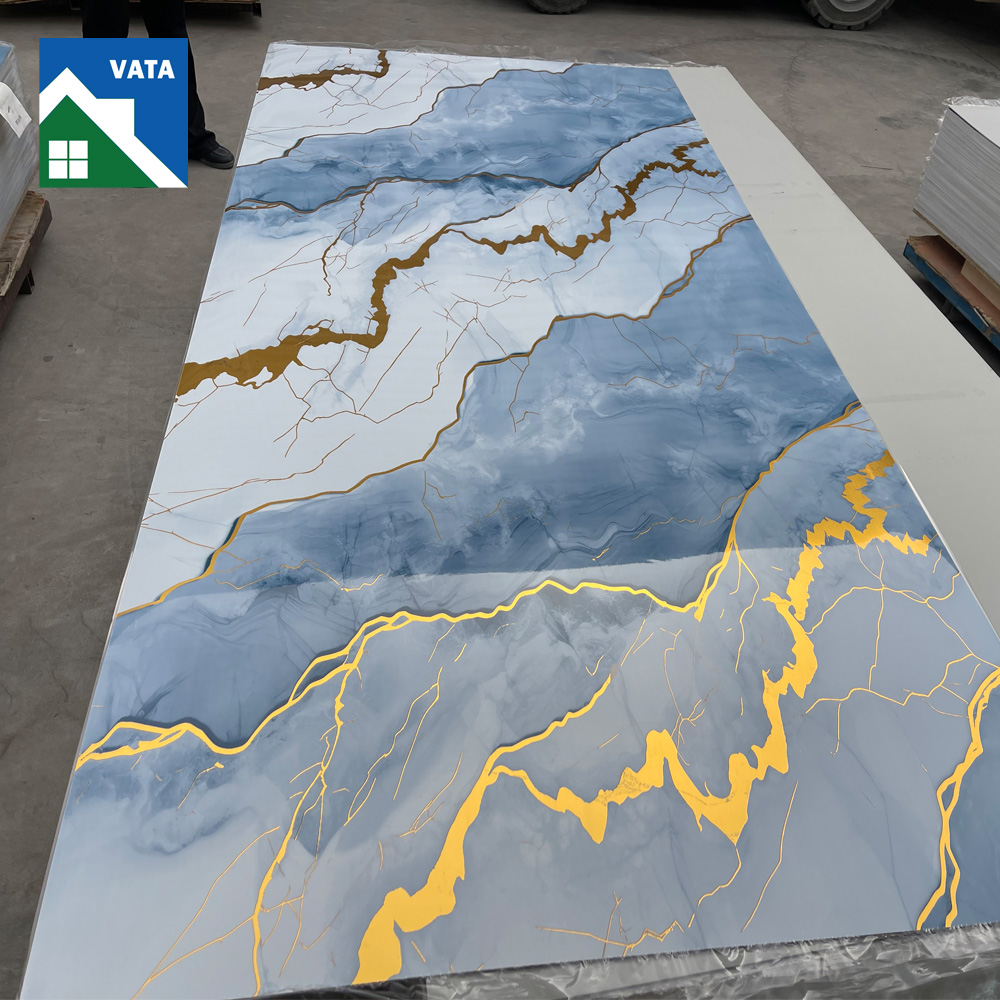
Customized High-Gloss PVC UV Wall Panel
Bendable high-gloss UV marble sheet for TV walls, lobby features and curved decorative panels. The PVC UV surface is easy to clean and gives Tehran apartment renovations a stone-look finish without the weight of natural stone.
View product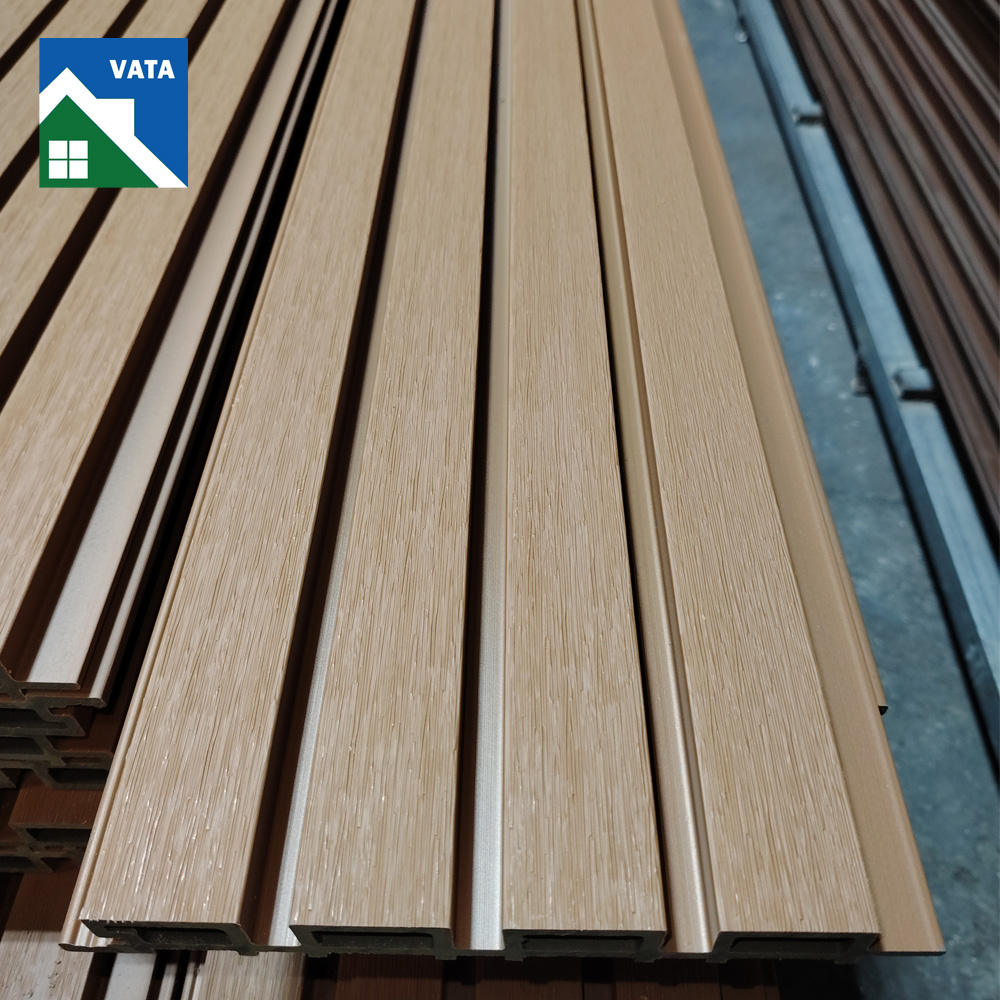
Decorative Outdoor WPC Fluted Wall Panel
Fluted wood-plastic composite cladding for exterior accents, balcony walls and shopfront partitions. The WPC profile resists moisture and reduces maintenance in dusty urban conditions.
View product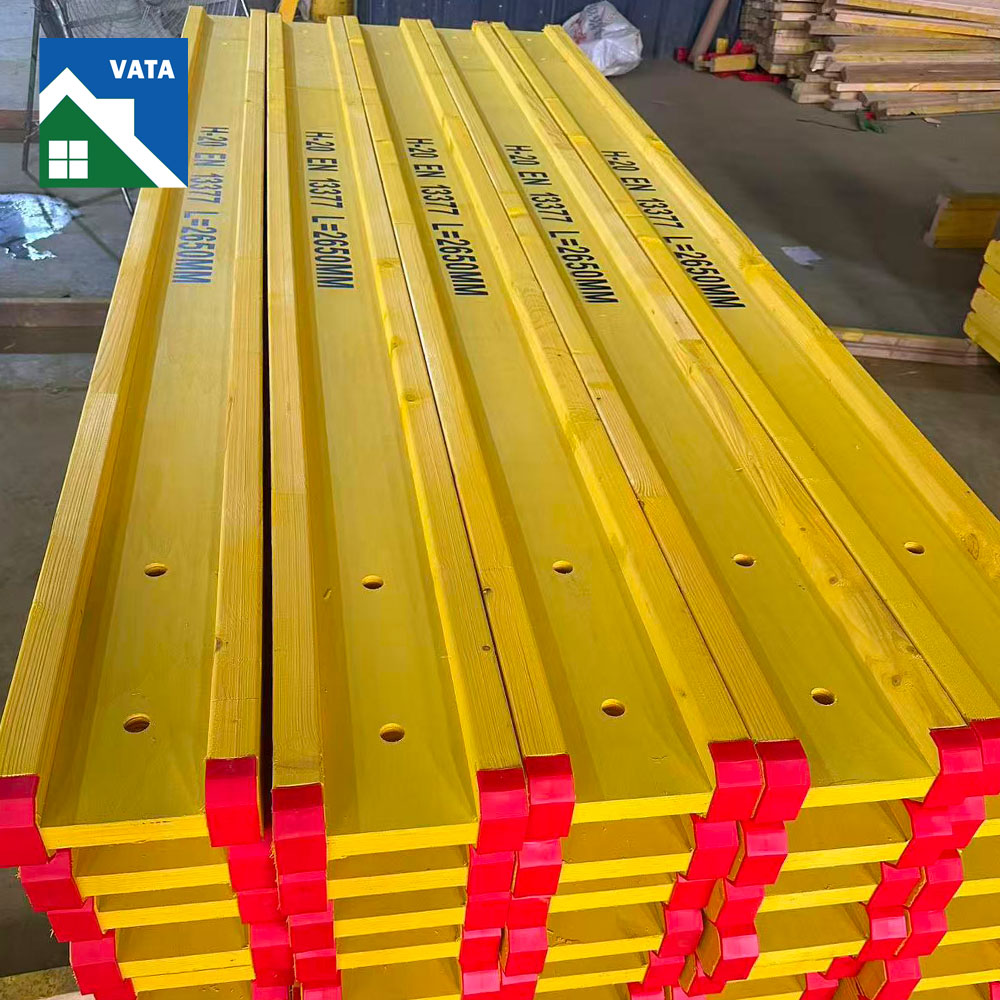
High Strength H20 Timber LVL Beam
Factory-direct H20 timber beam in LVL for slab formwork, shoring and high-load concrete work. Straightness and screw-holding help contractors in Tehran achieve repeatable formwork cycles.
View product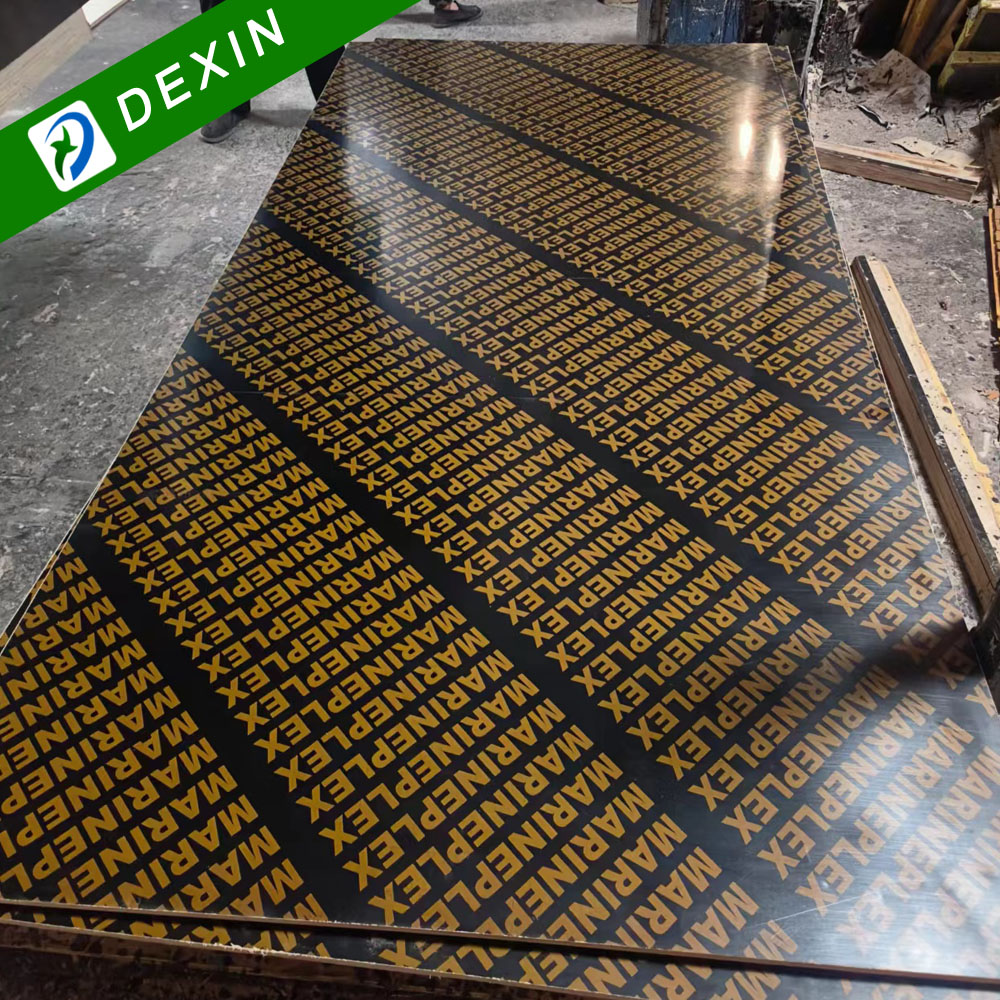
Film Faced Plywood for Construction Formwork
1220×2440 mm film faced plywood with a waterproof phenolic film for concrete formwork, protection boards and site applications. Available in 9 mm, 12 mm, 15 mm, 18 mm and 21 mm production ranges.
View product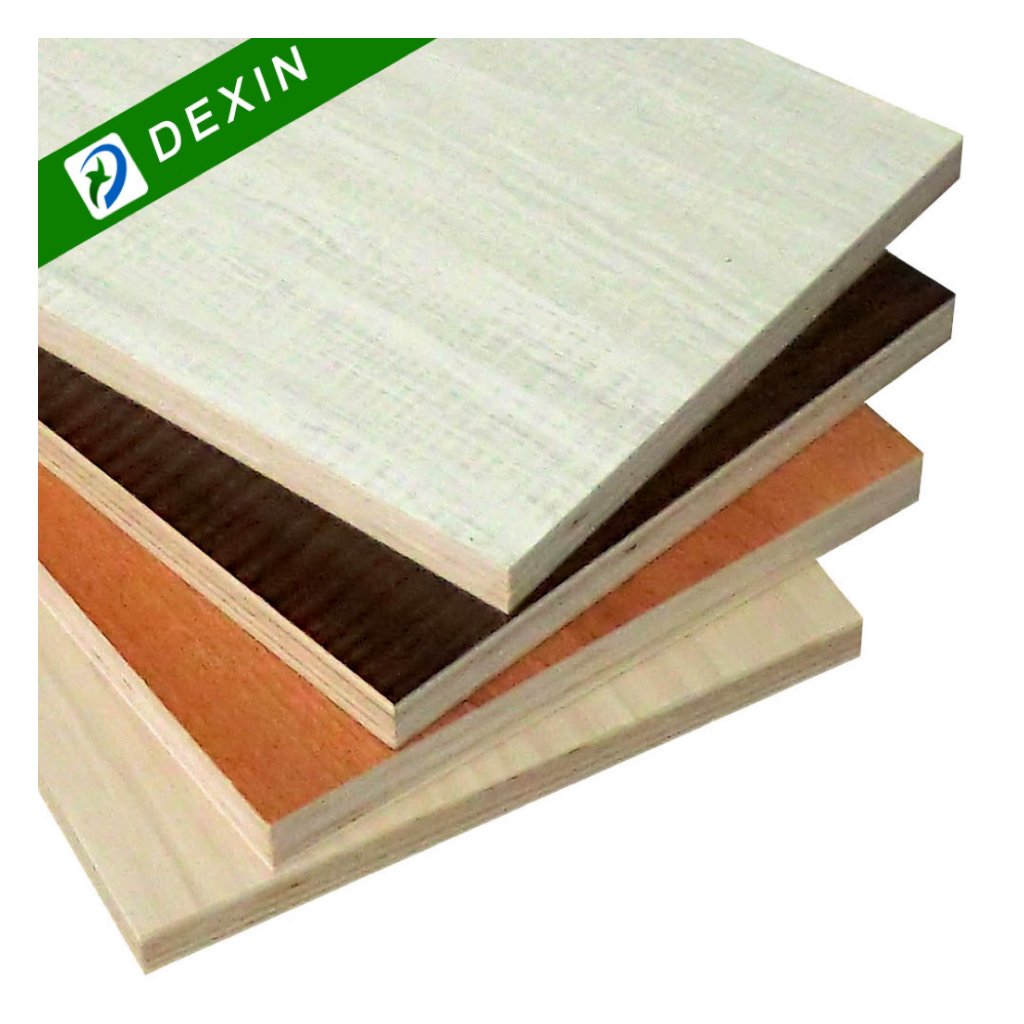
E0 First-Class Melamine Plywood for Cabinets
E0 first-class melamine plywood for furniture cabinets and wardrobes. The low-emission face and stable plywood core suit buyers who need a stronger alternative to standard chipboard.
View product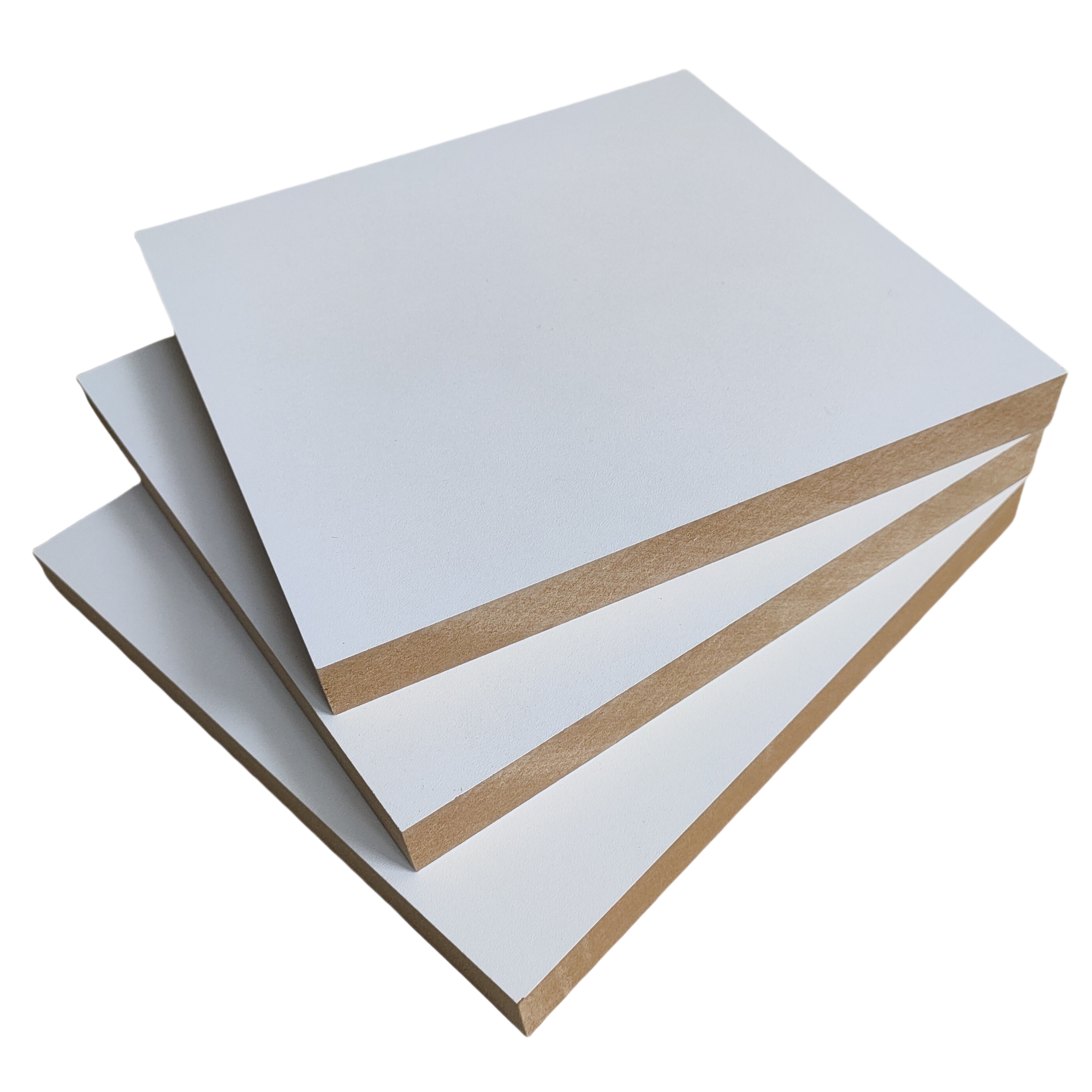
18mm Moisture-Proof White Melamine MDF
18 mm white melamine MDF with a moisture-proof core for kitchen cabinets, bathroom vanities and utility furniture. The white face supports clean edge banding and high-volume panel processing.
View product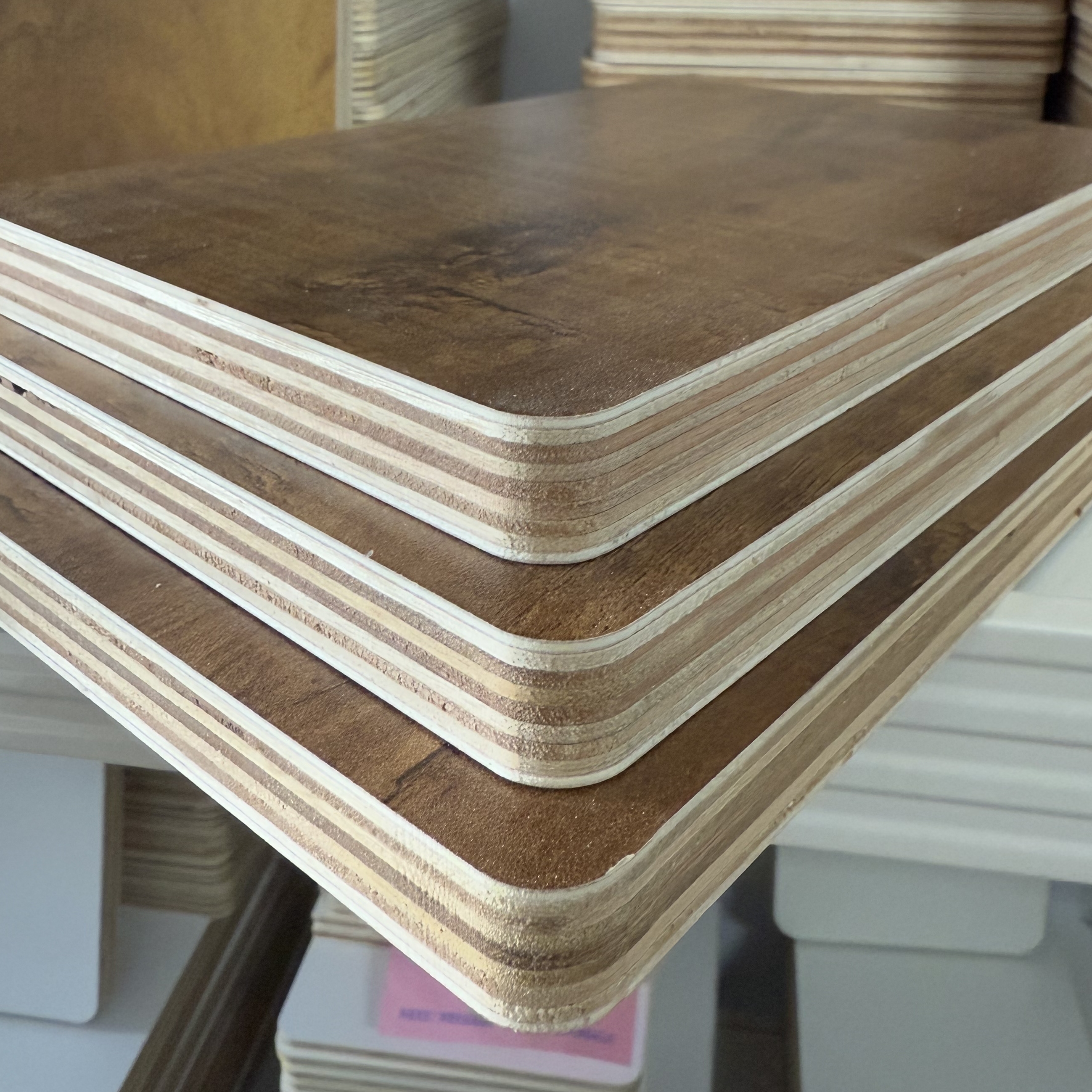
Waterproof Melamine Laminated Marine Plywood
Waterproof melamine laminated marine plywood in white, wood grain and marble grain. The 4×8 sheet is used for furniture, wet-area cabinetry and decorative panels that need a water-resistant ply core.
View product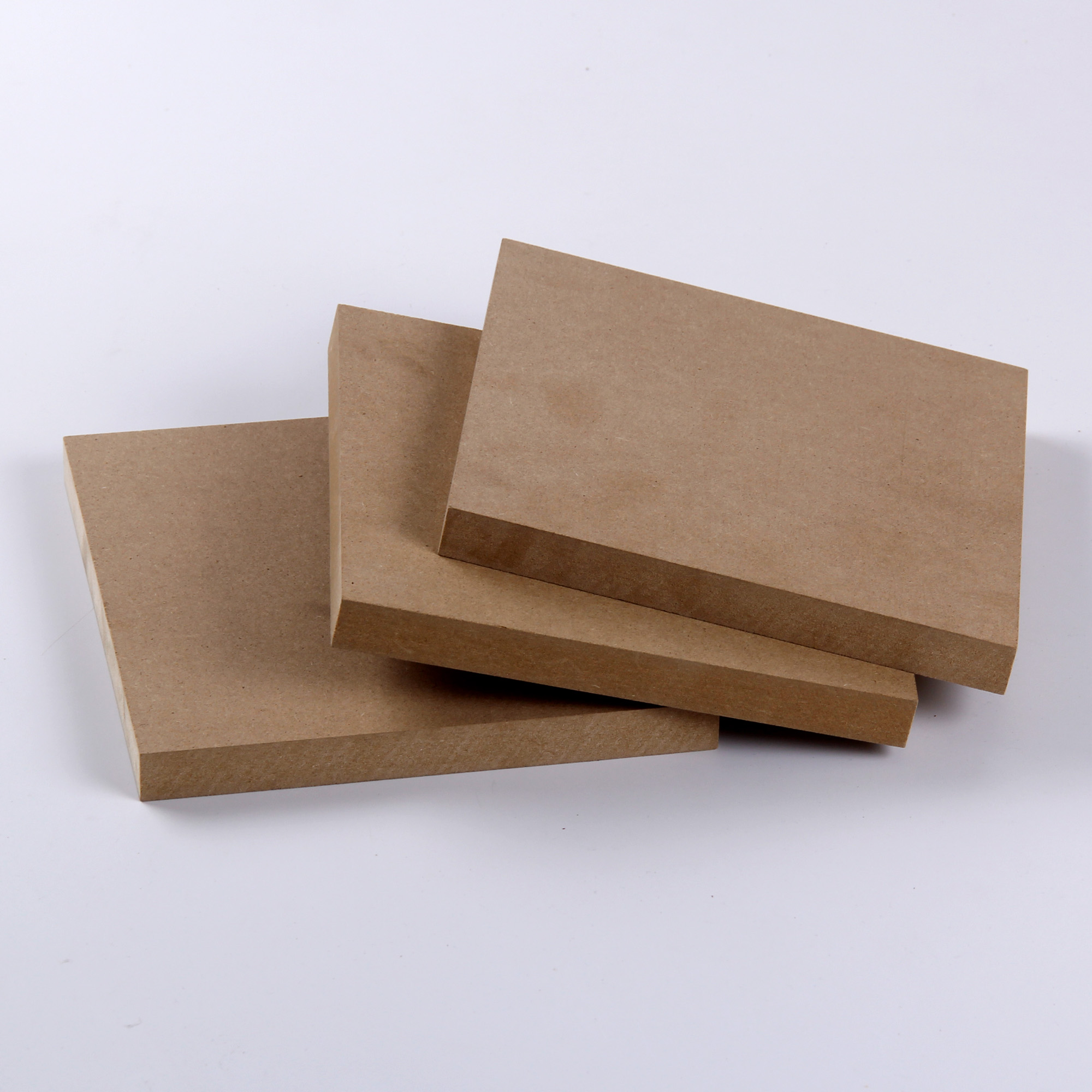
Raw MDF/HDF Board in Standard Thicknesses
Raw MDF/HDF in standard factory thicknesses including 5 mm, 6 mm, 8 mm, 9 mm and 18 mm. Suitable for local lamination, painting, CNC routing and melamine processing in Iran.
View productNeed melamine particle board, not the complementary panels above? Send your thickness, size, decor, emission grade, quantity and Tehran destination. KUDE can quote melamine particle board together with MDF, plywood and wall panels in a mixed container.
Get a Quote
A Linyi Factory Platform Built for Export, Not Just a Trading Desk
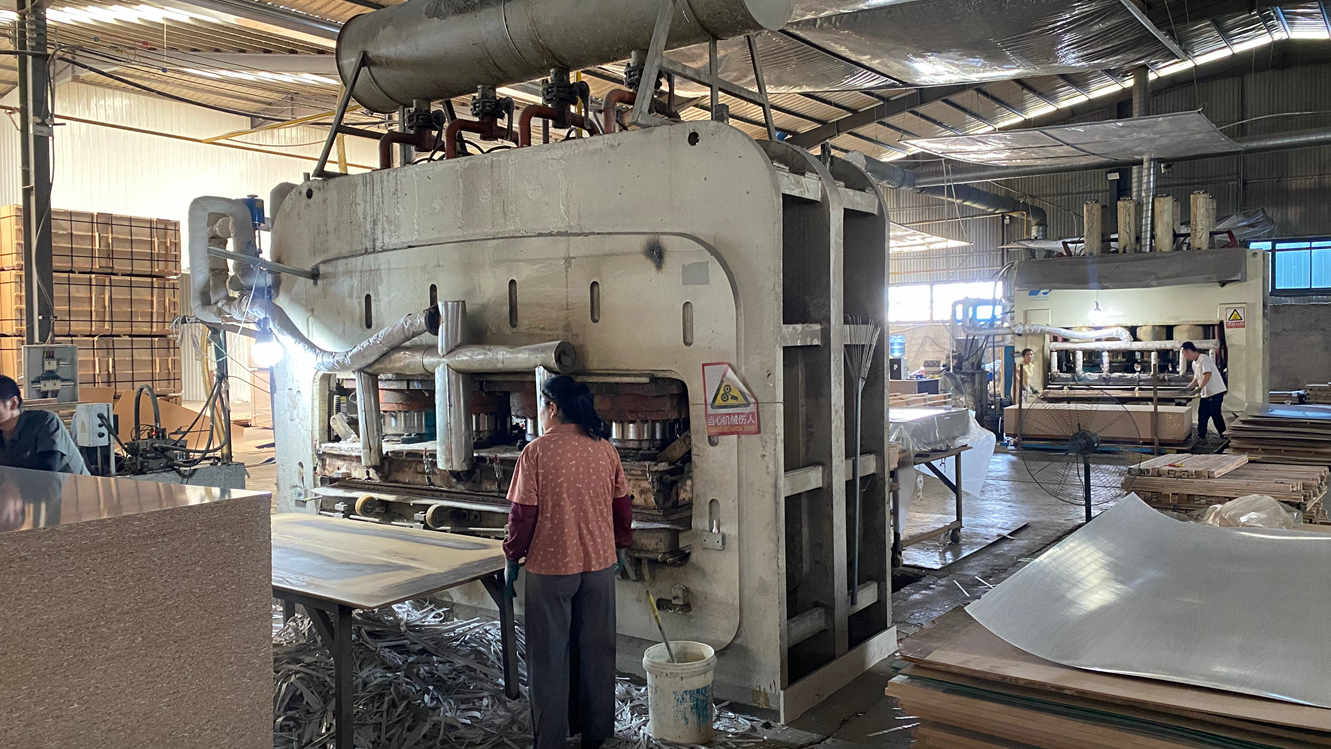
Linyi KUDE International Trading Co., Ltd. is the export platform of a wood-based panel manufacturing group founded in 1998 in Linyi, Shandong — China's largest man-made board production cluster. The group runs more than 30 sets of production machines in 30,000 m² of workshops, employs over 300 workers and produces about 60,000 m³ of plywood, blockboard, MDF and particle board annually.
For Tehran buyers, cluster position matters because veneer, resin, melamine paper and core materials are close to the press lines. That proximity supports shorter production cycles, clearer cost control and more responsive sampling for project orders. Our operating principle is simple: survival by quality, development by prestige.
Melamine Particle Board for Tehran: The Specification Questions That Decide Project Outcomes
For a Tehran importer, the lowest unit price is not always the lowest project cost. Consistent thickness, honest emission grade, stable decor and reliable edge performance protect the buyer from rework, returns and client complaints.
Melamine particle board, also described as melamine faced chipboard, starts with a wood particle core bonded under heat and pressure and then faced with melamine-impregnated paper. The melamine face is not the structure; it is the decorative and protective surface. Performance comes from the combination of core density, resin system, pressing control, thickness calibration and edge sealing. In Tehran, the most common specification conversation starts with 18 mm, 1220×2440 mm, E1 and a wood-grain or solid white decor. That is only a starting point. A kitchen cabinet run, a wardrobe and a reception desk tolerate moisture, load and abrasion differently.
Tehran's climate is generally dry, but buildings create micro-climates. Sink cabinets, dishwasher zones, bathroom vanities, laundry storage and evaporative-cooling areas can see short periods of high humidity. For these positions, specify moisture-resistant particle board or MDF for the carcass, seal cut edges and use a water-resistant adhesive for edge banding. For dry wardrobes and office storage, a standard interior grade can be cost-efficient when it is genuinely E1 or E0 and dimensionally stable.
Buyers should separate surface quality from core quality. A high-gloss or super-matte melamine face does not guarantee a dense core. Ask for density, internal bond, screw-holding, thickness tolerance and surface wear data. Ask how the supplier controls colour between batches, how it protects edges during packing and how it confirms the decor against an approved sample. Those questions reveal more than a catalogue photo.
Particle Board, MDF or Plywood: A Quick Selection Matrix
| Board type | Best-fit use in Tehran | Moisture exposure | Machining / edge behaviour | Commercial position |
|---|---|---|---|---|
| Melamine particle board | Kitchen cabinet carcasses, wardrobes, shelving, office storage, flat-pack furniture | Dry interiors; moisture-resistant grade for sink and vanity zones | Efficient cutting and drilling; edge banding quality is critical | Cost-efficient for high-volume interior joinery |
| Melamine MDF | Routed doors, painted profiles, high-gloss fronts, display units | Standard or HMR depending on location | Fine profiles and smooth edges; good for decorative machining | Higher density and finishing cost than particle board |
| Melamine plywood | Wet-area cabinetry, heavy-use furniture, structural furniture components | Waterproof or marine options for demanding zones | Strong screw-holding; face and core vary by grade | Higher cost, stronger performance under stress |
Use this matrix to align the board with the exposure and load, then confirm the final technical standard with samples, test reports and a written order specification.
Application Scenarios in Tehran: From Kitchen Cabinets to Office Fit-Out
The right board is determined by where the panel sits, not by the product name alone. In Tehran's residential and commercial interiors, these six scenarios account for most melamine particle board and complementary panel demand.
Apartment Kitchen Cabinets
Use 18 mm E1/E0 melamine particle board for dry carcasses and a moisture-resistant board for sink bases. Specify 2 mm PVC edge banding, sealed service holes and hardware reinforcement at hinge and drawer positions.
Built-In Wardrobes and Closets
Wood-grain melamine particle board in 18 mm or 25 mm shelving gives a consistent finish for bedroom storage. For enclosed bedrooms, low-emission E0 or E1 board supports indoor air quality goals.
Office and Coworking Fit-Outs
25 mm worktops, matching storage and meeting-room credenzas benefit from scratch-resistant melamine faces and stable cores. Mixed containers can combine particle board, MDF and plywood for one project schedule.
Retail and Showroom Shelving
Retail displays need colour consistency and reliable load performance. Confirm core density, shelf span and edge protection before approving a decor, especially for long runs of visible shelving.
Hospitality and Serviced Apartments
Hotel casegoods, wardrobe fronts and lobby joinery need repeatable colour and durable surfaces. Ask for batch reservations, approved samples and CARB/FSC documents where the project requires them.
Education and Healthcare Furniture
Desks, storage and reception counters should use cleanable melamine surfaces and safe edge details. Specify low-emission board and written test reports for sensitive indoor environments.
Tehran Procurement Trends Reshaping Panel Decisions
Tehran buyers are becoming more specific. Price still matters, but the cost of a failed batch, inconsistent decor or delayed documentation is now part of the buying decision.
Low-Emission Specifications
E0 and E1 language is moving from premium projects into mainstream furniture and joinery orders. Buyers increasingly request test reports and clear grade statements before confirming a supplier.
Mixed-Container Sourcing
Importers combine melamine particle board, MDF, plywood and decorative wall panels to fill one container, balance stock and reduce freight pressure. This requires a supplier with coordinated production and loading.
Decor Variety and Fast Samples
Matte wood grain, marble-look, textile feel and anti-fingerprint surfaces are part of the design conversation. Local furniture makers need fast colour matching and approved samples before production.
Documented Quality
Certificates alone are not enough. Buyers ask for loading photos, packing details, batch identification and inspection evidence. Pre-shipment transparency is becoming part of the quoted value.
KUDE Factory Advantages That Reduce Buyer Risk
For a Tehran importer, supplier selection should be evidence-based. Check the production base, machine capability, export experience, certification scope and loading records — not only a price list.
Own Production Lines
More than 30 machine sets cover peeling, gluing, hot pressing, sanding, laminating and packing. Direct factory control supports clearer cost structure and faster corrective action.
Verified Quality System
CE, ISO 9001, ISO 14001, FSC and CARB credentials, with SGS on-site assessment. E0, E1 and E2 grades are matched to the destination market and product application.
Flexible Customization
Sample-based, design-based and full customization are available: size, thickness, core species, face decor, glue type, logo printing and export packaging can be confirmed in writing.
Export-Ready Logistics
FOB, CFR, CIF and EXW terms; T/T and L/C payment; seaworthy pallet packing and full export documentation. MOQ is typically 50–500 sheets and several products can be combined.



From Specification to Container: A Practical Tehran Ordering Workflow
A clear workflow reduces sample rounds, avoids colour disputes and keeps the project schedule visible from both sides.
Define Use and Exposure
Identify whether the board is for dry wardrobes, kitchen carcasses, wet-area cabinets, office desktops or decorative wall panels.
Lock Technical Standard
Confirm thickness, sheet size, core type, density target, emission grade, melamine decor, gloss level and edge-banding requirement.
Approve Samples and Documents
Review colour, texture, thickness and test reports against the approved sample. Keep a signed specification for the order.
Confirm Commercial Terms
Fix quantity, mixed-loading plan, price, payment term, trade term and destination port. For Tehran, inland routing is confirmed with your forwarder.
Inspect, Pack and Load
Check surface, edges and packing before container loading. Receive loading photos, packing list and shipping documents for customs clearance.
Common Local Procurement Questions
These are the questions importers, furniture factories and contractors in Tehran most often ask before ordering melamine particle board and complementary panels from China.
Can you supply melamine particle board and melamine faced MDF to Tehran?
Yes. KUDE supplies melamine particle board, melamine faced MDF, melamine plywood and complementary decorative panels from its Linyi production base. Send the target thickness, sheet size, decor, emission grade and quantity so we can confirm the most suitable core and surface combination.
What is a typical 18 mm melamine particle board specification for Tehran kitchen cabinets?
Most kitchen carcasses use 18 mm, 1220×2440 mm E1 or E0 melamine particle board with a white or wood-grain face. For sink bases and other humid zones, specify a moisture-resistant core, seal cut edges and use a water-resistant edge-banding adhesive.
Which formaldehyde grade should Tehran buyers request?
E1 is the common baseline for interior furniture, while E0 is requested for sensitive residential, education and healthcare projects. CARB documentation can be provided on request for buyers who need it. Confirm the grade in the written order specification and ask for the corresponding test report.
How are boards protected during sea freight to Iran?
Export packing typically uses seaworthy pallets, plastic film, corner protection and steel straps. Container loading photos can be provided. For Tehran delivery, the final inland routing from the Iranian port is usually arranged by the buyer's forwarder, and KUDE can align the documents and loading plan with that schedule.
What is the MOQ and can I mix products in one container?
MOQ depends on the product line, typically from 50 to 500 sheets. Mixed containers are possible after confirming specifications, decor, packing and loading sequence. A typical mixed order may combine melamine particle board, melamine MDF, film faced plywood and decorative wall panels.
Can you customize sizes, thickness, decor and brand packaging?
Yes. KUDE supports sample-based, design-based and full customization, including size, thickness, core species, melamine decor, logo printing and export packaging. Custom orders require an approved sample, a written specification and a confirmed production lead time.
What payment and shipping terms do you accept?
We accept T/T and L/C in USD, EUR or CNY, and work on FOB, CFR, CIF and EXW terms. Shipments normally load through Qingdao and move toward Iranian ports before inland transport to Tehran. Final freight and routing are confirmed with the buyer's forwarder.
How can I verify quality before the container leaves China?
Request an approved sample, batch identification, thickness and emission reports, packing details and loading photos. Third-party inspection can be arranged before shipment. For repeat orders, keep a retained sample to check colour, texture and surface performance against future production.
Send Your Specification for a Factory-Direct Quote
Share the board type, thickness, size, decor, emission grade, estimated quantity, destination port and required certification. Our export team will return a technical proposal, packing plan and quotation for your Tehran project.